
Postpartum Abdominal Healing with TCM near Albert Park
If you’re searching for postpartum abdominal healing TCM Albert Park, you may be wondering whether abdominal tenderness or changes in how your stomach feels are part of recovery, or a reason to seek medical advice. A Traditional Chinese Medicine (TCM) consultation can offer a complementary perspective on wellbeing, but it cannot assess the medical cause of symptoms or replace postpartum care.
New, severe or worsening symptoms should be discussed promptly with your doctor or midwife. For other questions, an individual TCM consultation may explore your birth and health history, current symptoms, wellbeing and breastfeeding status, then discuss whether TCM support is appropriate for you. Herbal medicine needs particular care during breastfeeding, so general information is not enough to decide what is suitable for you.
Zhong Centre is at 306a to 310 St Kilda Road in St Kilda, near Albert Park. The clinic has wheelchair-friendly entrances and treatment rooms that accommodate mobility challenges. People from Elwood, Melbourne, Bayside, Armadale, Toorak, Windsor, Prahran, St Kilda East, Melbourne East, Elsternwick, Port Melbourne, Albert Park, Caulfield, Malvern, Chadstone, Balaclava and Ripponlea can find local postpartum TCM support here. This guide covers when symptoms may need medical attention, what to expect from a consultation and how complementary care can fit alongside postpartum healthcare.
Key Takeaways
- Postpartum abdominal recovery varies. An article cannot identify the cause of a symptom, so learn when to seek medical assessment.
- A TCM practitioner may use a traditional pattern framework to discuss your symptoms, birth and recovery context, wellbeing and health history.
- Maternity care, a TCM consultation and self-care have different roles. TCM does not replace medical assessment or postpartum care.
- Prepare by noting your symptoms, when they began, relevant birth details and questions. Share your current care, medicines and breastfeeding status.
- Zhong Centre in St Kilda offers TCM consultations and postpartum support with AHPRA-registered acupuncturists Dr Tahya, Dr Abbie and Dr Matt.
Postpartum abdominal changes: what may be expected and when to seek help
After birth, abdominal sensations or changes in shape can raise questions. You might notice tenderness, a different feeling through your midsection or a change in how your abdomen looks. Experiences vary, and a description alone cannot establish what is causing a particular change. Postpartum abdominal recovery is individual, not a fixed timetable.
Use general information to prepare questions, not to diagnose yourself. Timing matters: a sensation soon after birth may need a different assessment from one that appears later or changes over time. Your birth experience, overall recovery and any symptoms occurring alongside the change are also relevant to an individual medical assessment.
Why postpartum abdominal sensations can have different explanations
Abdominal changes can involve different structures and experiences, so it is best not to draw conclusions from one symptom alone. If you notice a change in your abdominal wall or how your midsection feels, describe it to a health professional rather than trying to identify a condition from an online description. An assessment can take your symptoms and recovery context into account.
Traditional postpartum customs may emphasise rest, warmth and practical support from family. These are cultural practices, not rules for every parent or substitutes for medical advice. Your needs, circumstances and care plan may differ from someone else’s. TCM concepts should not be used to assign a medical cause or pattern based on a symptom description alone.
If you’re considering postpartum abdominal healing TCM Albert Park support, keep the order clear: understand the symptom and seek appropriate assessment before considering complementary care. This helps keep traditional health discussions in their proper place.
When abdominal symptoms need medical attention
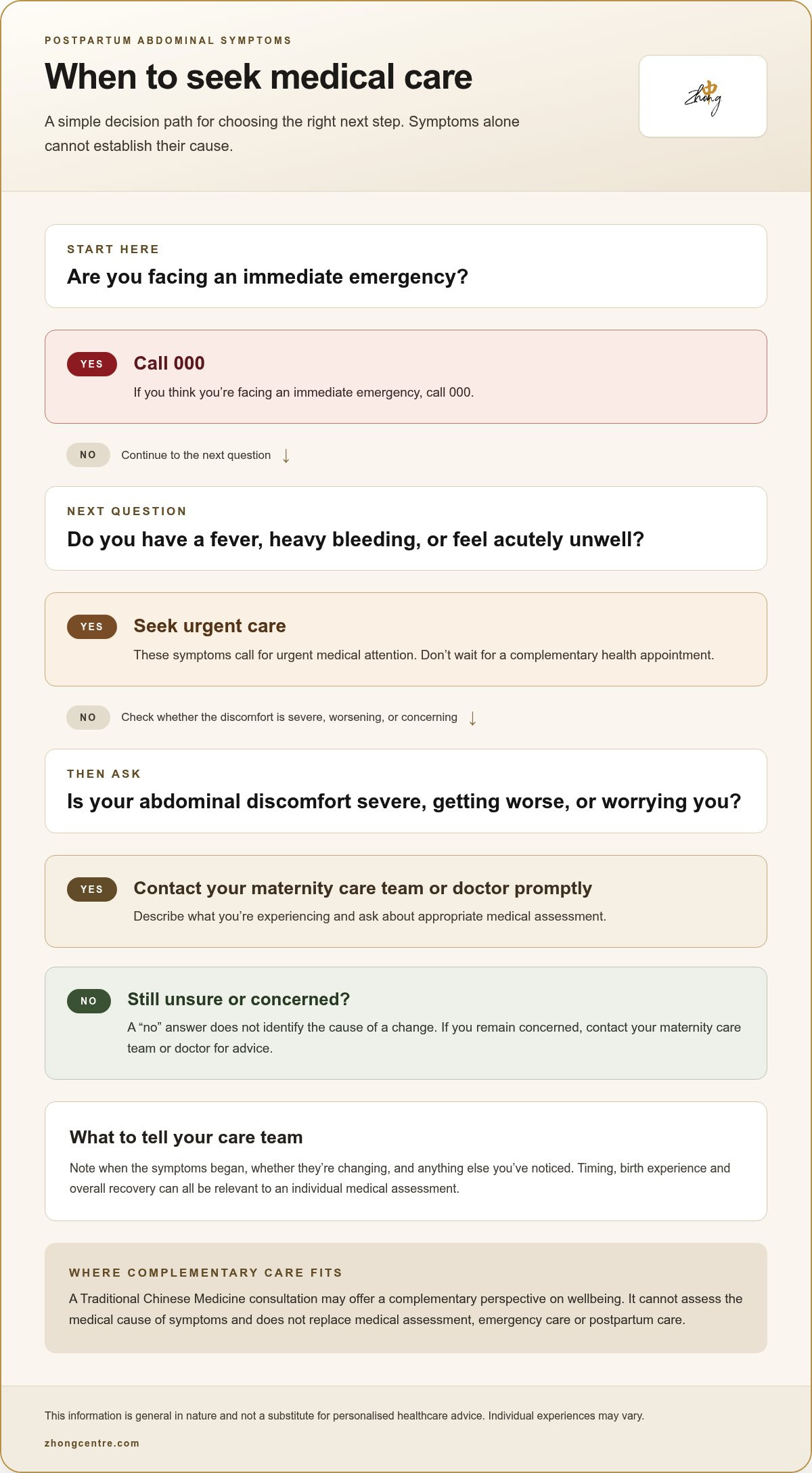
Contact your maternity care team or doctor promptly about symptoms that are severe, getting worse or concerning to you. Seek urgent care for fever, heavy bleeding or feeling acutely unwell. If you think you’re facing an immediate emergency, call 000. Don’t wait for a complementary health appointment to have urgent symptoms assessed.
- Get prompt medical advice if abdominal discomfort is severe, worsening or worrying you.
- Seek urgent care for fever, heavy bleeding or feeling acutely unwell.
- Tell your care team when symptoms began, whether they’re changing and what else you’ve noticed.
These signs do not point to one specific cause, but they do call for medical attention rather than self-diagnosis. TCM may be discussed as complementary postpartum support where appropriate. It does not replace emergency care, medical assessment or follow-up recommended by your maternity care team or doctor.
How Traditional Chinese Medicine may approach postpartum abdominal support
Traditional Chinese Medicine (TCM) considers symptoms alongside a person’s wider health and recovery context. One part of this approach is pattern differentiation, a traditional framework practitioners use to organise information and guide discussion about care.
TCM pattern differentiation is a traditional framework for considering wellbeing, not a biomedical diagnosis. It cannot confirm a medical condition or explain abdominal symptoms in place of an appropriate assessment. A TCM consultation can explore your concerns, while medical diagnosis and postpartum care remain with your maternity care team or doctor.
What an individual TCM assessment can explore
An individual consultation begins with your experience, not a one-size-fits-all postpartum template. The practitioner may ask about the abdominal sensations you’ve noticed, when they occur and how they affect everyday activities. Relevant birth details, recovery so far, general wellbeing and health history can also inform the discussion.
This whole-person view means abdominal symptoms are not considered in isolation. Where relevant, you may also discuss sleep, energy, appetite, stress and other health concerns. These details help the practitioner understand your circumstances within a Traditional Chinese Medicine framework, but they do not establish a medical cause.
It is not a pattern-matching quiz. Reading about TCM concepts online or recognising a familiar phrase is not a basis for diagnosing yourself or choosing herbs. Share what you’re experiencing and ask how the practitioner’s traditional framework relates to the discussion. You can raise questions or uncertainties throughout the consultation.
Where acupuncture and other TCM approaches fit
Zhong Centre offers TCM consultations and postpartum support. Depending on your circumstances and the consultation, a practitioner may discuss acupuncture or other TCM options. Whether an approach is suitable should be considered in light of your stage of recovery, health history and current care. No method is automatically right for everyone.
A TCM consultation offers an opportunity to discuss postpartum wellbeing through a traditional framework. It should not be presented as a way to heal abdominal tissue or treat a specific condition, and it does not replace assessment by your maternity care team or doctor.
If herbal medicine comes up, mention all medicines and supplements you take, along with your breastfeeding status. Don’t start, stop or use herbs based on general advice or an online pattern description. Discuss individual considerations with an appropriately qualified practitioner and, where relevant, your healthcare team.
For anyone considering postpartum abdominal healing TCM Albert Park options, a practical first step is a conversation grounded in personal context, not a promised result. You can book a TCM consultation to discuss postpartum support and what may be appropriate for you.
TCM, medical care and self-care: weighing postnatal options
TCM can be considered alongside postpartum healthcare, but it should not replace medical assessment, advice or care. Each has a different role: your maternity care team or doctor can assess symptoms and discuss medical care; a TCM consultation offers a traditional perspective on wellbeing; and gentle self-care can be shaped around your capacity and the guidance you’ve received.
There is no universal ranking of these options. The right mix depends on your circumstances, concerns and advice from your healthcare team. If symptoms are severe, worsening or otherwise concerning, medical assessment comes first. Complementary care is not a reason to delay it.
How to think about complementary support after birth
Think of a TCM consultation as a possible addition to your existing care, not a competing plan. A practitioner can discuss your concerns and consider whether a TCM approach is appropriate for your recovery stage and circumstances. Different approaches have different evidence and suitability; a general description of a modality is not proof that it will help a particular person.
Share relevant diagnoses, medicines and supplements, breastfeeding status, postpartum care and concerns about your recovery. This context informs a conversation about possible support and whether coordination with your healthcare team is relevant. Don’t stop prescribed medicines or begin herbs based on general information alone. If you’re unsure how a complementary approach fits with your care, raise it with your doctor, midwife or another maternity care professional.
Self-care is personal, too. Rest, practical help and gentle everyday activity may be part of looking after yourself, but there is no single routine that suits every parent. Follow individual advice you’ve received, and pause activities that cause concern while seeking guidance from your care team.
What realistic expectations look like
There is no fixed number of sessions or guaranteed timetable for postpartum support. People’s experiences and needs differ, and a consultation cannot promise a particular result. A sensible plan should respond to how you’re feeling, your recovery and any advice from your healthcare team.
If symptoms persist, change or begin to worry you, revisit the plan with your maternity care team or doctor rather than assuming more complementary sessions are the answer. Keep communication open about any TCM support you’re considering, so your care can be viewed in context. Medical assessment and complementary wellbeing support have distinct roles, and one should not be presented as a substitute for the other.
For a broader introduction to this traditional approach, Zhong Centre’s Chinese Medicine guide for Melbourne discusses its wider perspective on health. Use it as background, not as a way to diagnose symptoms or decide what care you need. Consider your options thoughtfully, keep your maternity care team informed and choose support that makes sense for your circumstances, including if you’re exploring postpartum abdominal healing TCM Albert Park care.
Preparing for a postpartum TCM consultation near Albert Park
A little preparation can help keep a postpartum TCM consultation focused. You don’t need a perfect timeline or technical language. A few notes about what you’ve noticed, when it began and what you’d like to understand can make it easier to explain your concerns.
Bring context that could shape the conversation, including relevant birth details, your current postpartum care, medicines and supplements, and whether you’re breastfeeding. You can ask how support may be tailored to your circumstances, what options the practitioner is considering and what those options cannot establish or address. A TCM consultation is complementary, not a medical diagnosis or replacement for postpartum care.
What to share and ask at your appointment
Keep your notes simple and practical. If a symptom changes with movement, rest or another everyday activity, include that too. A concise record can be more useful than trying to recall every detail during the appointment.
- Note what you’re feeling, when it started and whether it’s changing.
- Include relevant birth and recovery details, current care, medicines or supplements, and breastfeeding status.
- Write down questions about the proposed approach, its limitations and how it may fit alongside your existing care.
Ask how the practitioner will take your health history into account and consider your current care when discussing possible support. If a symptom is new, worsening or concerning, raise it with an appropriate medical professional rather than waiting for a TCM appointment. You don’t need to decide on an approach before you understand what’s being discussed.
If you’re looking for postpartum abdominal healing TCM Albert Park support, preparation can help keep the conversation grounded in your needs and questions. Any care plan should be individualised, and you can ask for clarification if something is unclear.
Getting to Zhong Centre from Albert Park
Zhong Centre is at 306a to 310 St Kilda Road, St Kilda, VIC 3182. The clinic has wheelchair-friendly entrances, and treatment rooms accommodate mobility challenges. These details may help you plan your visit if you have access needs.
On-site parking availability may vary. Nearby street parking is subject to local restrictions, so check the signs and conditions when planning your visit. Leave time for getting there, especially if you’re coordinating your visit around feeding, rest or other care.
When you’re ready to explore an individual consultation, you can book a postpartum TCM consultation with Zhong Centre. Use the appointment to discuss your concerns, relevant health context and questions about what support may be appropriate.
What postpartum support at Zhong Centre involves and how to book
Postpartum questions don’t always arrive neatly packaged. You may want to discuss abdominal sensations, your wider recovery or how Traditional Chinese Medicine (TCM) could fit alongside existing care. Zhong Centre offers postpartum support and TCM consultations in St Kilda, with the conversation centred on your circumstances rather than a promised result.
A consultation gives you an opportunity to explain what’s concerning you, share relevant health and birth history, and ask about possible approaches and their limitations. It can help you understand how a practitioner views your concerns through a Chinese Medicine framework. It cannot determine the medical cause of abdominal symptoms or promise to resolve them. Medical assessment remains important when symptoms need clinical attention.
The clinic setting and care approach
Zhong Centre is a Melbourne wellness centre offering holistic Chinese Medicine care. The clinic has three AHPRA-registered acupuncturists: Dr Tahya, Dr Abbie and Dr Matt. All Aesthetic Acupuncture appointments always include a full Chinese Medicine diagnostic treatment. For postpartum support, your consultation is an individual discussion about your circumstances and questions.
The clinic has wheelchair-friendly entrances, and treatment rooms accommodate mobility challenges. Bring questions about your health history, current care and breastfeeding to inform the discussion. The practitioner can consider your circumstances when talking through possible support. This is a conversation, not a commitment to a specific approach or a substitute for postpartum medical care.
Choosing a next step that feels right
If you have severe, worsening or concerning symptoms, prioritise assessment by your maternity care team or doctor before considering complementary support. Fever, heavy bleeding or feeling acutely unwell warrant urgent care. A TCM consultation is not an emergency service and should not delay medical attention.
If you’re exploring TCM and your symptoms do not require urgent assessment, booking starts a conversation about what you’re experiencing and what may be appropriate in your situation. You can discuss questions, relevant diagnoses, medicines and breastfeeding status, and consider how complementary support might fit alongside your existing care. You do not need to arrive with a diagnosis or a fixed plan.
For anyone considering postpartum abdominal healing TCM Albert Park support, Zhong Centre’s St Kilda clinic offers a local setting for an individual conversation. Choose a next step that suits your circumstances. To discuss postpartum support, book a consultation at Zhong Centre.
Choose a considered next step
You don’t need every answer before deciding what to do next. It may help to make a short list of the questions you still have and consider what kind of support feels appropriate. Your recovery is personal, and your choices can be, too.
If you’re considering postpartum abdominal healing TCM Albert Park support, a consultation can be a starting point for discussing your circumstances and asking about possible options. Take the time you need to understand the approach and decide what feels right for you.
If you’d like to begin that conversation, book a postpartum TCM consultation at Zhong Centre in St Kilda.
Frequently Asked Questions
Is abdominal pain normal after giving birth?
Some abdominal discomfort can occur after birth, but what’s expected depends on your individual recovery and circumstances. Pain that feels unusual, interferes with daily activities or is getting worse deserves medical advice rather than an assumption that it’s simply part of recovery. Note where you feel it, when it started and whether anything changes it. This information can help your maternity care team or doctor assess your concerns.
When should I seek medical help for abdominal pain after birth?
Seek medical advice promptly if pain is severe, worsening or worrying you. Fever, heavy bleeding or feeling acutely unwell warrant urgent care. If you think you’re experiencing an emergency, call 000. Don’t use a TCM appointment or home care as a reason to delay assessment. If you’re unsure how urgent a change is, contact your maternity care team or doctor for guidance.
Can Traditional Chinese Medicine support postpartum recovery while breastfeeding?
TCM may be discussed as complementary support while breastfeeding, but no approach or herbal medicine should be assumed suitable for everyone. Tell the practitioner you’re breastfeeding and share medicines, supplements and relevant health information. Ask about the proposed approach and its limitations, and discuss concerns with your maternity care team or doctor. If herbs are raised, don’t self-prescribe or rely on general advice to assess suitability for you or your baby.
What happens during a postpartum TCM consultation?
A postpartum TCM consultation is a discussion about your concerns and relevant health context. You can describe what you’ve noticed, when it happens and what you’d like to understand. The practitioner may ask about your health history, birth and recovery, current care and wellbeing. You can ask what an option involves and what it cannot determine. It is not a medical diagnosis, so keep your maternity care team involved in clinical concerns.
How many acupuncture sessions might postpartum support involve?
There is no fixed number of acupuncture sessions that applies to every postpartum person. Whether acupuncture is appropriate, and whether to continue, depends on individual circumstances and discussion with your practitioner. You can ask how progress would be reviewed and what might prompt a change in plan. If symptoms persist or change, seek advice from your doctor or maternity care team rather than assuming additional sessions are the answer.
Can acupuncture address abdominal separation after pregnancy?
Acupuncture should not be presented as a way to bring separated abdominal muscles together or diagnose abdominal separation. If you notice a change in your abdominal wall or have concerns about strength or function, ask a medical professional for an individual assessment and guidance about appropriate care. A TCM consultation may discuss broader wellbeing, but it does not replace assessment of the abdominal muscles or establish whether separation is present.
Is acupuncture appropriate after a caesarean birth?
It may be a topic to discuss, but suitability depends on your recovery, health and timing after surgery. Tell the practitioner you’ve had a caesarean, share any concerns about your incision and follow the advice of your maternity care team or doctor. Don’t assume acupuncture is suitable near a healing incision. If you have new or worsening pain, wound concerns, fever or feel unwell, seek medical advice before considering complementary support.
This information is general in nature and not a substitute for personalised healthcare advice. Individual experiences may vary.