
Natural Support for Menopause Mood Swings in Caulfield
Natural support for menopause mood swings in Caulfield can start with understanding your own pattern, rather than choosing a supplement straight away. Mood changes can feel unpredictable, and menopause may be one influence alongside sleep, stress, health changes or other factors. There isn’t one explanation or a universal remedy.
If you’re sorting through mixed advice online, it’s reasonable to want a more considered approach. This article explains how menopause-related changes may connect with mood without assuming they’re the only cause. It also outlines what you can discuss in an individualised Chinese Medicine consultation, including your symptoms, health history, current medicines and supplements. Depending on your circumstances, acupuncture or an herbal medicine prescription may be discussed as part of tailored care. You’ll also find practical ways to prepare for a consultation at Zhong Centre in Melbourne. The focus is an informed conversation, not quick fixes or sweeping claims.
Key Takeaways
- Understand the difference between perimenopause and menopause, and why mood changes can have more than one influence.
- Explore how a Chinese Medicine consultation can offer an individualised framework for discussing your concerns and broader health context.
- Weigh up wellbeing habits, supplements and practitioner-guided options by considering evidence limits, personal circumstances and safety.
- Prepare for a consultation by noting mood patterns, other concerns, medicines, supplements and questions you’d like to raise.
- Explore natural support for menopause mood swings in Caulfield, including a local TCM consultation and discussion of possible care options.
Menopause mood swings in Caulfield: what may be behind the changes?
A shorter fuse, unexpected tears or a stretch of feeling flat can be unsettling, especially when the pattern seems to change from week to week. These experiences may happen around menopause, but they don’t point to one cause by themselves. Mood can reflect a mix of physical, emotional and life circumstances.
Menopause-related mood changes are shifts in emotional wellbeing that occur around the menopausal transition, but timing alone doesn’t establish why they’re happening.
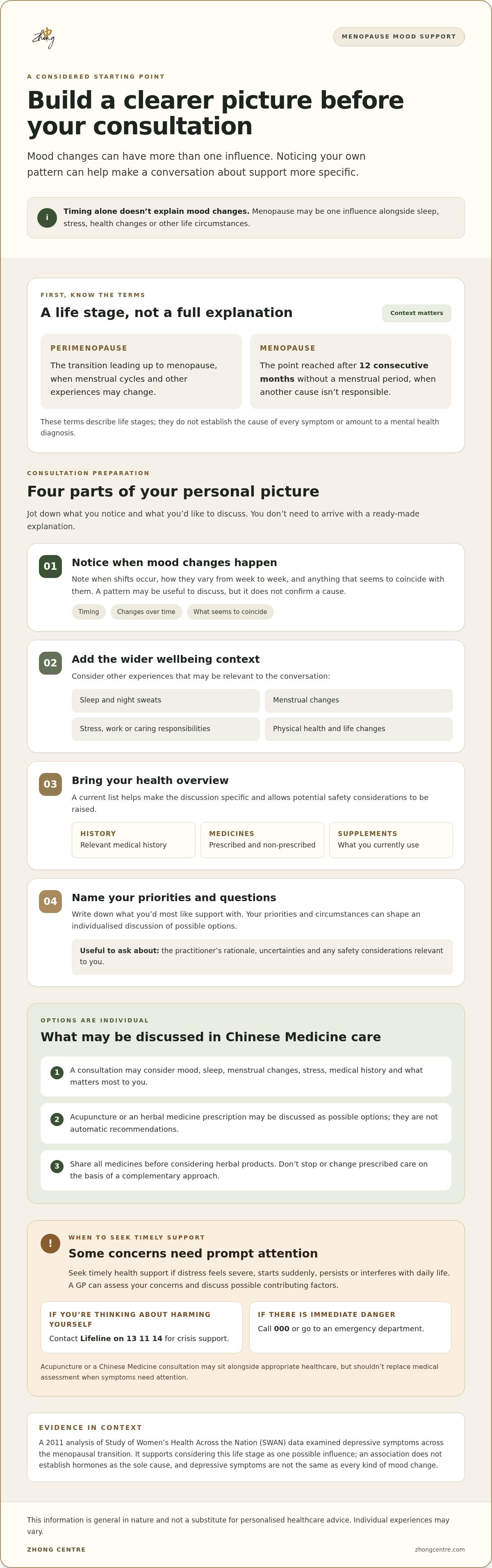
Perimenopause is the transition leading up to menopause, when menstrual cycles and other experiences may change. Menopause refers to the point reached after 12 consecutive months without a menstrual period, when another cause isn’t responsible. These are life-stage terms, not explanations for every symptom or a mental health diagnosis. Menopause on Wikipedia offers a broader overview of these stages and commonly discussed experiences.
How can menopause-related changes affect mood?
Hormonal changes may coincide with shifts in emotional wellbeing for some people. Sleep disruption can also matter: night sweats or difficulty sleeping may leave you feeling more tired, less resilient or more emotionally stretched the next day. That pattern is possible, not universal. Work pressures, caring responsibilities, physical health, existing mental health concerns and other life changes may also play a part.
Research can describe patterns, but it can’t identify the reason for an individual’s mood changes on its own. Bromberger and colleagues’ 2011 analysis of Study of Women’s Health Across the Nation (SWAN) data examined depressive symptoms across the menopausal transition. It supports considering this life stage as one possible influence, but depressive symptoms aren’t the same as every kind of mood swing, and an association doesn’t prove hormones are the sole cause. Your own timing, symptoms and health context matter.
Intensity and timing vary. You might notice irritability after several poor nights’ sleep, or mood changes that don’t seem tied to an obvious pattern. Neither example confirms a cause. If you’re exploring natural support for menopause mood swings in Caulfield, start by noticing what’s changing and consider discussing it with a health professional rather than relying on a single online explanation or product claim.
When should mood changes receive prompt attention?
Seek timely health support if distress feels severe, starts suddenly, persists or interferes with daily life. A GP can assess your concerns and discuss possible contributing factors. Acupuncture or a Chinese Medicine consultation may sit alongside appropriate healthcare, but shouldn’t replace medical assessment when symptoms need attention.
If you’re thinking about harming yourself, contact Lifeline on 13 11 14 for crisis support. If you or someone else is in immediate danger, call 000 or go to an emergency department. You deserve prompt, practical help, not pressure to explain everything on your own.
What does a Chinese Medicine perspective add to menopause support?
A Chinese Medicine consultation offers time to discuss your concerns alongside the wider context of your health. That may include mood, sleep, menstrual changes, stress, medical history and what matters most to you. The aim is to build an individual picture for discussion, not to assume every concern has one cause or that a traditional assessment can medically diagnose every symptom.
Chinese Medicine uses traditional concepts to organise observations and guide discussion. These concepts are distinct from biomedical explanations, which consider factors such as hormonal changes and other health influences. One framework doesn’t automatically confirm the other. The WHO information on menopause describes menopause as a natural life stage and recognises that experiences, including mood changes, can vary. For broader context, Zhong Centre’s menopause and hormonal support guide can help you frame questions to raise.
What may an individualised consultation discuss?
Before a consultation, jot down when mood changes occur, how sleep has been, any menstrual changes and what you’d most like support with. Include relevant medical history and a current list of medicines and supplements. This helps make the conversation specific and allows potential safety considerations to be discussed. There’s no need to arrive with a ready-made explanation.
Any care plan depends on the consultation and practitioner judgement. Your priorities and health circumstances help shape the discussion. An assessment is a framework for considering options, not proof of a particular cause.
How might acupuncture or herbal medicine fit?
Share all prescribed and non-prescribed medicines before considering herbal products. That information supports a careful conversation about possible interactions and whether an option is appropriate. Don’t stop or change prescribed care on the basis of a complementary approach. If mood concerns are severe or persistent, keep medical support part of the picture.
For people considering natural support for menopause mood swings in Caulfield, a useful first step is an open discussion rather than a one-size-fits-all remedy. Zhong Centre provides TCM consultations and menopause and hormonal support in Melbourne for people from Caulfield and nearby suburbs. A consultation gives you the opportunity to discuss your concerns and possible options.
Natural support options for mood swings: how to weigh them up
“Natural” can sound like a shortcut to simple and safe. It isn’t a safety guarantee, and a product marketed for menopause may not suit your health circumstances. Compare options by asking what they’re intended to support, how strong the evidence is for that use, whether they can be tailored to you and what safety questions need attention.
Suitability depends on your health context, current medicines and individual needs, not on whether an option is labelled natural.
Everyday wellbeing habits: Regular routines, movement and social connection may support general wellbeing. Their role is broad, and they’re not a guaranteed way to change mood symptoms.
Over-the-counter supplements: Products vary in ingredients and claims. Evidence for a specific product or use may be limited, and personal safety considerations matter.
Practitioner-guided support: A consultation brings your concerns and health context into the discussion. Acupuncture or a prescribed herbal medicine may be considered where appropriate, without assuming either is right for everyone. Some individuals also look into body-centred therapies and counselling with practices such as Soma.Soul.Somatics to help navigate the emotional and nervous system shifts that can occur during this life stage.
What can everyday self-care contribute?
Start with manageable observations, not a strict new regime. A regular wind-down routine may give sleep a steadier shape; gentle movement that fits your capacity and time outdoors can be practical wellbeing habits. Staying connected with people you trust may also make it easier to talk through a difficult patch. These steps aren’t proof that mood changes are caused by menopause, nor do they guarantee a particular effect.
For a few weeks, note sleep, mood shifts, movement and any noticeable changes in your routine. Look for patterns without judging yourself or treating the notes as a diagnosis. This record can help you explain what you’ve noticed in a healthcare conversation.
What should readers consider before using supplements?
Pause before adding a product, especially if you take prescribed or over-the-counter medicines, have a health condition or use more than one supplement. Share the product name and ingredient list with a health professional so they can discuss possible interactions and suitability. Don’t stop prescribed medicines or replace medical care with a supplement based on a label or online claim.
A practitioner may consider herbal medicine only after an individual assessment, with your health history and current medicines included in the discussion. That’s different from selecting a product based on a broad symptom category. Evidence and safety can vary by ingredient, preparation and intended use, so avoid assuming that a general claim applies to your situation.
How can you compare options in practice?
When weighing natural support for menopause mood swings in Caulfield, compare options against your priorities rather than looking for a universal answer. Ask what an approach aims to support, what is known and uncertain, how it fits with your existing care, and what to monitor. If distress is severe, sudden or persistent, seek timely health support rather than relying on self-care or supplements alone.
Preparing for menopause mood support near Caulfield
A little preparation can make a consultation feel more focused. You don’t need to arrive with a diagnosis or a polished explanation. Bring what you’ve noticed, what concerns you and what you’d like to understand. For people considering natural support for menopause mood swings in Caulfield, a clear record can help make the discussion more specific to their needs.
A simple preparation sequence:
- Note your concerns. Write down what feels most difficult and what you’d like support with.
- Track any patterns. Record when mood changes occur, alongside sleep, menstrual or other health changes you’ve noticed.
- List medicines and supplements. Include prescribed, non-prescribed and complementary products, with names or packaging details if handy.
- Bring your questions. Note what you want to know about the consultation, possible care options and how these might fit with your existing healthcare.
What information is useful to bring?
Keep notes brief and practical. For example, you might record that mood changes seem to follow disrupted sleep, or that their timing feels unrelated to your cycle. These are observations, not conclusions. Include relevant health history and current medicines or supplements so they can inform the conversation. Mention concerns that feel important, even if they seem unrelated; the broader context can help shape what you discuss.
What questions can help make the visit useful?
It’s reasonable to ask what a TCM consultation may involve and how discussion of your concerns informs individualised care. You could also ask:
- How might any proposed option fit with my current care and medicines?
- What is known about the option, and where is the evidence uncertain?
- What should I monitor, and how might we review whether the plan still suits me?
- When should I seek additional medical advice?
These questions keep the conversation grounded. You can share your goals without expecting a particular result. Any discussion of acupuncture or an herbal medicine prescription depends on your individual circumstances and practitioner judgement.
For Caulfield residents and people from nearby Melbourne suburbs, planning the practical details can help the appointment fit into your day. Zhong Centre’s Melbourne consultations are relevant to people travelling from St Kilda, Elwood, Melbourne, Bayside, Armadale, Toorak, Windsor, Prahran, St Kilda East, Melbourne East, Elsternwick, Port Melbourne, Albert Park, Caulfield, Malvern, Chadstone, Balaclava and Ripponlea. Set aside your notes and medicine list beforehand, and consider what you’d like to leave understanding, whether that’s possible next steps or questions to raise with your other health professionals.
If you’re ready to discuss your concerns in an individualised consultation, book a Zhong Centre consultation.
Explore personalised menopause support at Zhong Centre
Menopause-related mood concerns can be personal, layered and difficult to sum up in a search box. Zhong Centre offers menopause and hormonal support through Traditional Chinese Medicine consultations in Melbourne, including for people travelling from Caulfield and nearby suburbs. A consultation is an opportunity to discuss what you’ve noticed and consider possible options in the context of your individual needs, without assuming one explanation or promising a particular result.
What a considered next step can look like
You can bring the concerns that matter to you, whether that’s mood changes, sleep, menstrual changes or how these experiences fit alongside other health priorities. The discussion may include your health history, current medicines and what you hope to understand. There’s no need to arrive with a fixed plan. The focus is a thoughtful conversation about your circumstances and possible next steps.
Depending on the individual consultation and practitioner judgement, acupuncture or an herbal medicine prescription may be discussed as possible elements of care. They aren’t automatic recommendations, and a consultation can’t guarantee symptom improvement. You can ask how any proposed option may fit with existing healthcare, what is known or uncertain, and what should prompt further medical advice.
Keep the approach collaborative and evidence-aware
Share relevant information openly, including medicines, supplements, health conditions and care you’re already receiving. This gives the practitioner context for discussing whether an option may be appropriate and where coordination with other healthcare professionals matters. Chinese Medicine draws on a traditional framework; it doesn’t replace medical assessment or establish the cause of every symptom.
People exploring natural support for menopause mood swings in Caulfield may also want broader background on Chinese Medicine. Zhong Centre’s Chinese Medicine guide for Melbourne readers can offer context alongside an individual consultation. Keep questions about evidence and uncertainty in the conversation, and remember that experiences differ between people. An individualised approach means the discussion is shaped around you, not a standard formula or a predicted outcome.
If you’d like to discuss your concerns and possible support options, you can book an appointment at Zhong Centre. The appointment is an opportunity to explore your questions and relevant health context without expecting a particular result.
Take your next step with a clearer picture
You don’t need to have every answer before seeking support. A useful next step can simply be making space to discuss what you’ve noticed, what matters to you and what questions remain. That’s a grounded starting point for exploring natural support for menopause mood swings in Caulfield, without assuming one explanation or expecting a particular result.
Consider what would help you feel informed: a chance to talk through your health context, understand possible options and decide what feels appropriate for you. The conversation can be collaborative and paced around your concerns. You remain part of the decision-making at every step.
To discuss your concerns and possible support options, book a consultation with Zhong Centre.
Frequently Asked Questions
Can menopause cause mood swings?
Mood swings can occur during the menopausal transition, but menopause isn’t necessarily the only influence. Hormonal changes may overlap with disrupted sleep, stress, life changes or other health concerns. The World Health Organization recognises mood changes among experiences associated with menopause, while individual experiences differ. If changes are new, persistent or affecting your day-to-day life, discuss them with a GP rather than assuming they’re simply hormonal.
Is acupuncture a natural option for menopause mood swings?
Acupuncture may be discussed as one possible part of an individualised Chinese Medicine approach, but it shouldn’t be presented as a reliable way to change mood or as a substitute for medical assessment. Evidence can vary by the question being studied, and research findings don’t predict an individual response. If you’re considering natural support for menopause mood swings in Caulfield, discuss your goals and existing care during a consultation.
How do I prepare for a menopause support consultation in Caulfield?
Bring a concise list of your main concerns, current medicines and supplements, relevant health history and questions. If you’ve noticed changes around work shifts, a new medicine or a particularly stressful period, note that too. You don’t need a complete symptom diary. Choose the details that feel useful, and mention anything you’re unsure is relevant. A Melbourne consultation can provide an opportunity to discuss those concerns.
Can Chinese herbal medicine interact with prescription medicines?
Yes, Chinese herbal medicines and other supplements may interact with prescription medicines, so share a complete list before considering them. Include non-prescription products and any recent changes to your medicines. If you have the packaging or ingredient information, bring it or note the product name. Don’t stop, start or alter prescribed medicines on your own. A practitioner can discuss whether an herbal prescription is appropriate in light of your health information.
What happens if menopause-related mood changes feel severe?
Seek timely support from a GP or another appropriate health professional if distress feels severe, sudden, persistent or makes daily activities difficult. If you’re thinking about self-harm, contact Lifeline on 13 11 14. If there’s immediate danger, call 000 or go to an emergency department. Acupuncture or a Chinese Medicine consultation shouldn’t delay urgent assessment or replace support for a mental health crisis.
How long does natural support for menopause mood changes take to work?
There isn’t a reliable timeframe that applies to everyone, and no particular outcome can be promised. Timing depends on the concern, the approach being discussed and individual circumstances. Before starting an option, ask what changes to monitor, when to review whether it remains suitable and what to do if symptoms worsen. Keep your GP informed, especially if mood changes persist or begin affecting your safety or daily functioning.
This information is general in nature and not a substitute for personalised healthcare advice. Individual experiences may vary.