
Postpartum Acupuncture Melbourne: Supporting Your Fourth Trimester Recovery
Postpartum recovery isn’t a waiting game. It’s a period of replenishment, even when caring for a newborn leaves little room to rest. If you’re exploring postpartum acupuncture melbourne, you may be looking for thoughtful support for your recovery, not a promise of a quick fix.
The fourth trimester can bring physical exhaustion, sleep deprivation, hormonal shifts and baby blues. You might also feel depleted after birth. Those experiences deserve care and a clear plan, not pressure to simply push through.
At Zhong Centre in St Kilda, Dr Abbie Cloherty and the team draw on Traditional Chinese Medicine principles to consider the whole person. Within this traditional framework, birth may be understood as depleting Qi and blood. Acupuncture can be considered as one supportive part of an individual postnatal approach.
This guide explains the traditional reasoning behind that approach, what a consultation may involve and how postnatal support can be shaped around your needs. The focus is a grounded conversation about recovery, energy and emotional wellbeing alongside appropriate medical care.
This information is general in nature and not a substitute for personalised healthcare advice. Individual experiences may vary.
Key Takeaways
- Learn how Traditional Chinese Medicine describes postnatal depletion and how its traditional framework can inform a conversation about recovery.
- Understand the traditional practice of Mother Warming with moxibustion, and how warmth is used in some post-birth care approaches.
- Explore how postpartum acupuncture melbourne may be considered as part of an individual approach to postnatal wellbeing, including physical discomfort and emotional changes.
- Find out what a St Kilda consultation may involve, from discussing your birth experience to traditional pulse and tongue observation.
- See how Zhong Centre’s whole-person approach can help you discuss support options for your fourth trimester.
The Fourth Trimester: Why Melbourne Mums Seek Postpartum Support
Birth is a major physical transition, but recovery doesn’t follow a neat timetable. The weeks after birth, often called the fourth trimester, bring healing, hormonal changes and the demands of caring for a newborn. The broader postpartum period, also known as the fourth trimester, includes a range of physical and emotional changes, not just the first few days at home.
In Traditional Chinese Medicine, the early postnatal period is sometimes described as the “Golden Month”, a time traditionally associated with rest, warmth and replenishment. This idea offers a different perspective from the pressure to return immediately to everyday routines. At Zhong Centre in St Kilda, traditional concepts can inform an individual conversation about your birth experience, recovery and day-to-day circumstances.
The Reality of Postnatal Depletion
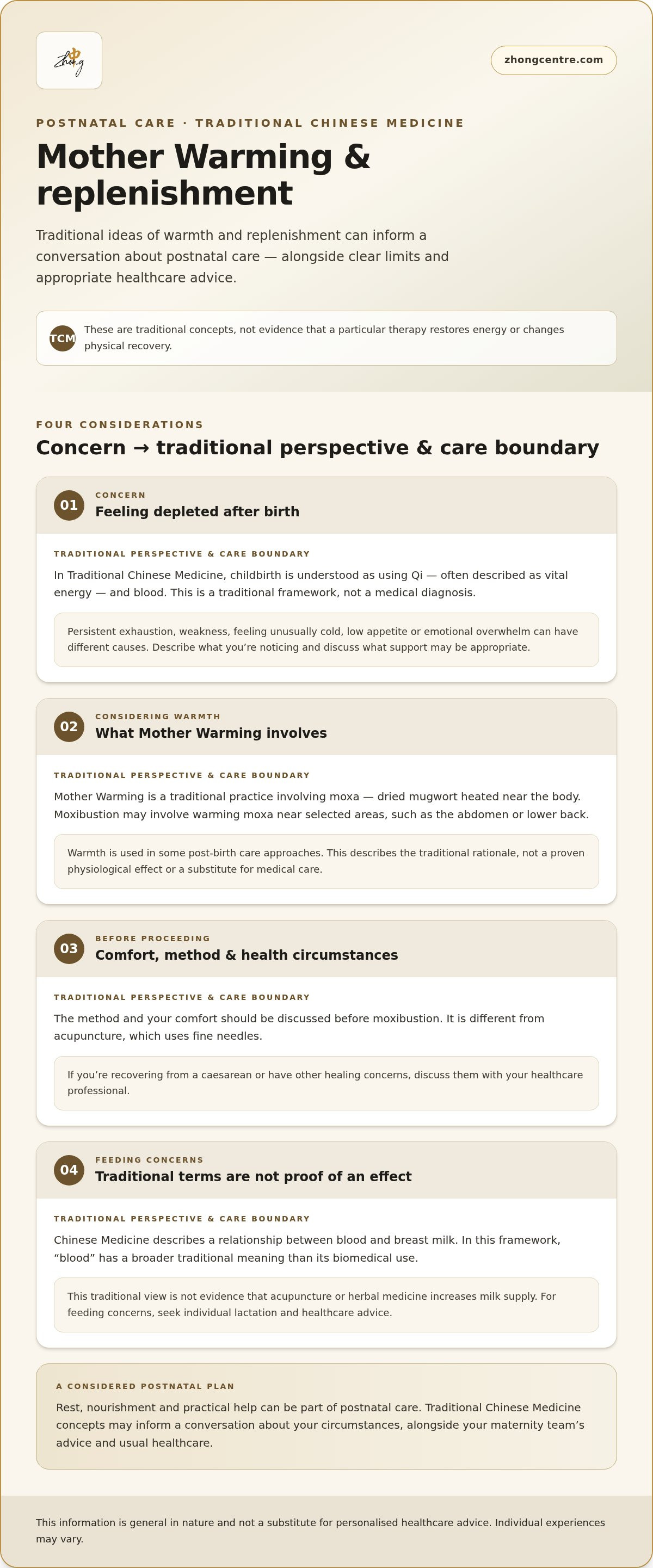
There’s tired, and then there’s feeling as though your reserves are running low. Birth involves significant physical effort, while feeding, interrupted sleep and caring for a newborn can make rest difficult. In Traditional Chinese Medicine, childbirth is understood as using Qi, often described as vital energy, and blood. This is a traditional framework, not a medical diagnosis.
Persistent exhaustion, weakness, feeling unusually cold, low appetite or emotional overwhelm may be reasons to seek individual support. These experiences can have different causes, so they don’t confirm a particular imbalance. A considered recovery plan gives you space to describe what you’re noticing and discuss what support may be appropriate.
A Logic-Based Approach to Recovery
“Wait and see” isn’t the only way to think about postnatal care. A proactive approach can mean noticing patterns, making room for rest where possible and seeking personalised guidance instead of relying on generic advice. Traditional Chinese Medicine concepts can be discussed in the context of your circumstances, without suggesting acupuncture replaces medical care.
For a Melbourne family, practical recovery may involve planning around feeds, transport, older children and the realities of leaving home with a newborn. At a St Kilda consultation, postpartum acupuncture melbourne can be discussed as part of a wider conversation about your needs and goals. Your practitioner can explain the traditional approach, its limits and how acupuncture may fit alongside your existing care.
The Logic of TCM Recovery: Mother Warming and Replenishment
Traditional Chinese Medicine describes postnatal care through concepts of warmth, rest and replenishment. These are traditional ideas, not evidence that a particular therapy restores energy or changes uterine recovery. They can sit alongside practical postnatal care, such as following your maternity team’s advice and seeking support for physical or emotional concerns. MedlinePlus provides general guidelines for postpartum care.
“Mother Warming” is a traditional practice involving moxa, dried mugwort heated near the body. In Traditional Chinese Medicine, warmth is used as part of some post-birth care approaches. This describes the traditional rationale, not a proven physiological effect or a substitute for medical care.
The Mechanics of Mother Warming
Moxibustion involves warming moxa and positioning it near selected areas, which may include the abdomen or lower back. The method, your comfort and your health circumstances should be discussed before proceeding. Moxibustion is different from acupuncture, which uses fine needles. Mother Warming should not be presented as a proven way to improve circulation, support uterine healing or increase energy. If you’re recovering from a caesarean or have other healing concerns, discuss them with your healthcare professional.
Replenishing Blood and Qi
In Chinese Medicine, “tonifying” describes a traditional approach intended to nourish what the framework considers depleted. Qi is a concept within this system, while “blood” has a broader traditional meaning than the biomedical use of the term. Chinese Medicine also describes a relationship between blood and breast milk. This is a traditional view, not evidence that acupuncture or herbal medicine increases milk supply. For feeding concerns, seek individual lactation and healthcare advice.
Acupuncture points are selected according to a practitioner’s assessment within the Traditional Chinese Medicine framework. The Spleen and Heart refer to functional systems in Chinese Medicine, not necessarily problems with the anatomical organs. This terminology helps explain how a practitioner may develop a traditional care plan; it is not a medical diagnosis or proof of a specific treatment effect.
Rest, nourishment and practical help can all be part of a considered postnatal plan, without promising a particular recovery. If you’re considering postpartum acupuncture melbourne, a consultation at Zhong Centre gives you an opportunity to discuss whether acupuncture may be suitable alongside your usual care. Explore postpartum support options.
Addressing Postnatal Wellbeing: A Targeted Approach
Postnatal concerns can overlap. Hormonal changes, interrupted sleep, feeding positions and physical healing may all be part of your experience. A Chinese Medicine consultation gives you space to describe what’s happening and discuss whether acupuncture is appropriate for your circumstances. Traditional concepts can inform that discussion, but they don’t establish a medical diagnosis or demonstrate that acupuncture changes hormones, mood or recovery.
Hormonal Balance and Emotional Health
In Chinese Medicine, Shen is a traditional concept relating broadly to the spirit or emotional presence. A practitioner may use this framework to explore how you describe feeling unsettled, restless or emotionally changeable after birth. It isn’t a measure of hormone levels, and acupuncture shouldn’t be presented as regulating hormones or addressing postnatal anxiety or depression.
If you’re experiencing persistent or worsening low mood or anxiety, speak with a healthcare professional. Acupuncture should not replace mental health assessment or care. If you’re concerned about your immediate safety or your baby’s, seek urgent help from a health professional or emergency service.
Physical Recovery and Pain Management
Feeding and holding positions may be relevant if your neck, shoulders or back feel uncomfortable. Your practitioner can discuss your symptoms and health history, and whether acupuncture is suitable to consider. That conversation doesn’t establish that acupuncture will relieve pain. Ongoing, severe or concerning symptoms warrant assessment by an appropriate healthcare professional.
After a caesarean or vaginal birth, the details of your recovery matter. A consultation can include discussion of your birth, healing and any care you’re already receiving. Acupuncture should not be described as healing a wound or controlling inflammation, and it doesn’t replace postnatal medical care. Pelvic floor concerns also call for individual assessment rather than assumptions about what’s expected after birth.
Frequent night waking can affect how you feel during the day. Acupuncture cannot guarantee longer or uninterrupted sleep, and a session doesn’t change a baby’s waking pattern. If you’re considering postpartum acupuncture melbourne, Zhong Centre can discuss your concerns and explain the traditional approach, its limits and how it may fit alongside your existing care.
What to Expect at Your St Kilda Postpartum Consultation
Your first postpartum consultation at Zhong Centre is a chance to explain what you’ve been experiencing and what you’d like to discuss. Your practitioner may ask about your birth, current concerns, sleep, feeding and general wellbeing. Pulse and tongue observation are traditional Chinese Medicine assessment practices. They inform a Traditional Chinese Medicine perspective, but aren’t diagnostic tests or evidence that a particular approach will produce a health outcome.
Acupuncture or herbal medicine may be discussed in light of your individual circumstances. If herbal medicine is considered, share whether you’re breastfeeding and provide details of medicines or supplements you take. Your consultation can cover the traditional rationale, relevant considerations and whether an option is appropriate to discuss alongside your usual healthcare.
Your First Session at Zhong Centre
Zhong Centre’s St Kilda clinic offers a setting for a conversation about your postnatal experience. Your practitioner can explain what a proposed session involves and discuss practical ways to help you feel comfortable. Raise any questions or preferences before deciding whether to proceed.
Postnatal skin can change too. If you’d like to discuss skincare separately from your Chinese Medicine consultation, you can explore the Glow masque serum. It’s a skincare product, not a substitute for personalised healthcare advice.
The Practicalities of Postnatal Appointments
There isn’t one booking date that suits every birth and recovery. Discuss timing in view of your birth, healing and current health, especially if you’ve had a caesarean or other complications. Appointment frequency is also individual. Your practitioner can explain a proposed plan and review it with you; a series of sessions doesn’t guarantee a particular result.
Planning a St Kilda visit with a newborn takes real-world logistics. Allow time for your journey, pram and anything you need for feeding or settling bub. Your baby is welcome at the clinic, so bring them if that works best for you. A short list of essentials may make getting out the door feel more manageable.
If you’re considering postpartum acupuncture melbourne, a Zhong Centre consultation gives you space to discuss your priorities and learn about the traditional approach. Learn about postpartum consultations.
Reclaiming Your Vitality: Why Melbourne Mums Choose Zhong Centre
Motherhood doesn’t require you to run yourself into the ground. Postnatal care can include support for you, not only your baby. At Zhong Centre in St Kilda, Dr Abbie Cloherty and the team take a whole-person approach informed by Chinese Medicine and shaped around your circumstances. The focus is compassionate care and clear information, without pressure to treat exhaustion as a badge of honour.
That means discussing what acupuncture may and may not offer, and distinguishing traditional Chinese Medicine concepts from medical advice. Your consultation can consider your goals and concerns without promising a particular result or suggesting acupuncture replaces medical or mental health care.
The Rebel Expert Philosophy
The “martyr” model tells new mums to put themselves last and simply push through. We take a different view. Your wellbeing matters in its own right, and asking for support isn’t a failure. The aim is to give you clear information and space to make choices that fit your needs, not another impossible standard to meet. Meet Dr Abbie and the team and learn more about the people behind this approach.
Local care, built around real life
Based in St Kilda, Zhong Centre is convenient for local families planning a visit from nearby suburbs. Whether you’re in Elwood, Bayside, Armadale, Toorak, Windsor, Prahran, St Kilda East, Melbourne East, Elsternwick, Port Melbourne, Albert Park, Caulfield, Malvern, Chadstone, Balaclava or Ripponlea, the practical details of a local appointment matter when energy is limited. Plan your trip around feeds, naps, a pram or support from family, and bring your baby if that works best for you.
Postpartum acupuncture melbourne is one option to explore as part of a wider recovery plan. It’s not a shortcut to vitality or a substitute for appropriate healthcare. It’s an opportunity to discuss your postnatal experience with a practitioner and consider whether Chinese Medicine support may be suitable for you.
Explore personalised postpartum support at Zhong Centre and consider whether a consultation is right for you.
Make Space for Your Fourth Trimester Recovery
Your recovery deserves care, not pressure to simply push through. Traditional Chinese Medicine offers a framework centred on rest and replenishment, while acupuncture may be considered as one part of personalised postpartum support. The right approach depends on your circumstances and should sit alongside appropriate healthcare.
At Zhong Centre, Dr Abbie Cloherty leads a team offering pregnancy and postpartum support. At the St Kilda clinic, you can discuss your birth experience, current concerns and whether postpartum acupuncture melbourne may suit your recovery goals. The aim is a thoughtful conversation, not a promise of a particular result.
To discuss your options, book a postpartum support session at Zhong Centre. Taking time to consider your own wellbeing is a valid part of caring for your family, and you can approach it one step at a time.
This information is general in nature and not a substitute for personalised healthcare advice. Individual experiences may vary.
Frequently Asked Questions
Is postpartum acupuncture safe while I am breastfeeding?
Whether acupuncture is suitable while breastfeeding depends on your individual health and circumstances. Tell your practitioner that you’re breastfeeding, share any medicines or supplements you take, and mention concerns about your recovery. At Zhong Centre in St Kilda, these details can inform a discussion about whether acupuncture may be appropriate for you. If you’re considering herbal medicine as well, discuss breastfeeding before taking any prescribed herbs.
How soon after giving birth can I start acupuncture?
There isn’t one start date that suits everyone. Your birth, healing, symptoms and overall health all matter, particularly after a caesarean or if you’ve had complications. Discuss timing with your maternity healthcare professional and acupuncturist before arranging a session. They can consider your circumstances and explain whether postnatal acupuncture may be suitable at that stage. Don’t use a fixed timeframe as a substitute for personalised advice.
Can acupuncture help with my energy levels after a C-section?
Acupuncture may be considered as supportive care, but it can’t promise to restore energy or replace medical assessment after a caesarean. Recovery, interrupted sleep and other health factors can all contribute to fatigue. Share how you’re feeling, details of your birth and any concerns about your incision with your healthcare professional. A practitioner can then discuss whether acupuncture fits alongside your postnatal care, without assuming fatigue has one cause.
Do I need to bring my baby to the appointment?
No, you don’t need to arrange childcare to attend Zhong Centre. Bub is welcome at the St Kilda clinic, so bring your baby if that makes the visit more manageable. You may find it useful to bring anything you need for feeding or settling them. If you’d prefer to attend without your baby, that’s fine too. Choose the option that feels most practical on the day.
How many sessions will I need to feel a difference?
There’s no set number of sessions that can predict how you’ll feel. Your concerns, health history and response to acupuncture all inform whether further appointments might be considered. Your practitioner can discuss a plan and review it with you as you go, rather than assuming a particular course will suit everyone. Acupuncture doesn’t guarantee a specific change, and your care plan can be reconsidered in light of your needs.
Is Mother Warming painful or does it involve needles in the stomach?
Mother Warming refers to a traditional moxibustion practice using warmth from heated mugwort, or moxa. Moxa itself isn’t a needle, and the method can be discussed before anything begins. Acupuncture needles are a separate technique and aren’t automatically placed in the abdomen. Tell your practitioner about tenderness, a caesarean incision or any healing concerns so they can discuss whether this approach is appropriate for you.
Can I have acupuncture if I have a history of postpartum depression?
A history of postpartum depression is important information to share before acupuncture. Discuss your current wellbeing and mental health care with your practitioner, and continue working with your GP or mental health professional. Acupuncture should not replace professional mental health support or prescribed care. If you’re experiencing severe distress or have concerns about your safety or your baby’s, seek urgent help from a health professional or emergency service.
Is the treatment covered by private health insurance in Australia?
Whether acupuncture is covered depends on your health fund, level of extras cover and policy conditions. Check directly with your insurer about acupuncture benefits, eligible practitioners, limits and any waiting periods that apply to your policy. Coverage can vary, so don’t assume a session will be reimbursed. If you’re exploring postpartum acupuncture Melbourne options, you can ask your fund what information it needs before attending Zhong Centre in St Kilda.
This information is general in nature and not a substitute for personalised healthcare advice. Individual experiences may vary.