

Gua Sha Routine for Beginners: Step-by-Step Facial Guide
A gua sha routine for beginners doesn’t need to involve forceful strokes or a complicated sequence. If online tutorials have left you unsure which way to glide, what to apply first or whether redness is normal, start with a gentle, repeatable approach. Comfort matters more than dramatic-looking movements.
This guide explains how to prepare your skin, hold your tool and move it with light pressure. You’ll also learn when to pause and how to keep expectations grounded when online claims about facial sculpting and skin benefits sound bigger than the evidence.
We’ll cover what to use for glide, how to follow your tool’s instructions and what to do if your skin feels uncomfortable. At-home self-care is different from a practitioner-led Gua Sha Facial, but both call for thoughtful technique and attention to your skin.
Key Takeaways
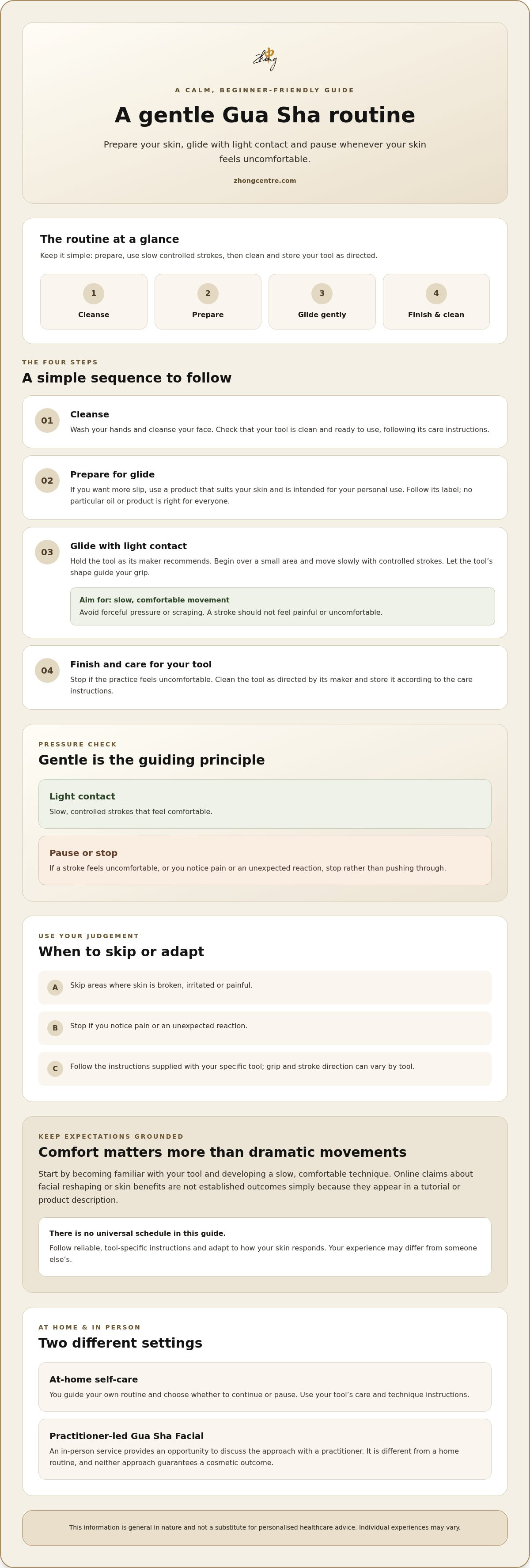
- A simple beginner routine is to cleanse, prepare your skin for glide, use gentle strokes and clean your tool afterwards.
- Keep movements slow and controlled. They should feel comfortable, not painful or forceful.
- There’s no universal schedule established here, so follow reliable, tool-specific instructions and adapt to how your skin responds.
- Skip areas where skin is broken, irritated or painful, and stop if you notice pain or an unexpected reaction.
- At-home self-care differs from an in-person Gua Sha Facial. Zhong Centre is a Melbourne clinic offering Gua Sha Facial services if you’d like to discuss the approach in person.
What Is a Gua Sha Routine for Beginners, and What Can It Realistically Offer?
A gua sha routine for beginners is a personal-care practice using a smooth-edged tool, moved over the face with light, controlled contact. It’s a way to learn a considered technique at home, not a shortcut to a particular facial shape or a substitute for healthcare advice.
Gua sha has a longer history and cultural context than its current popularity as a facial tool suggests. The Gua sha overview describes its traditional Chinese Medicine context. That history should be kept distinct from claims about what a modern facial routine can do. The history of a traditional practice does not, on its own, verify every visible or physiological benefit promoted online.
What does facial gua sha involve?
Facial gua sha involves moving a smooth-edged tool across the skin, rather than pressing forcefully or scraping the face. For a home routine, focus on handling the tool gently and following reliable, tool-specific guidance. This is personal care, not a way to diagnose or manage a health concern.
You may encounter claims about lymphatic drainage, collagen, detoxification or facial reshaping. Don’t treat them as established outcomes simply because they appear in a tutorial or product description. Evidence needs to be checked against relevant studies, and any supported finding should be described carefully. Research about a different type of gua sha, body area or setting may not apply to gentle facial self-massage.
What should a beginner expect?
Start with a modest aim: become familiar with the tool and develop a slow, comfortable technique. The goal isn’t to copy forceful strokes or chase a dramatic result. Your experience and your skin’s response may differ from someone else’s, so judge the practice by how it feels rather than by online images or claims.
A home routine is also different from a practitioner-led Gua Sha Facial. At home, you guide your own self-care and choose whether to continue or pause. In a practitioner-led service, you can discuss the approach with a practitioner. Zhong Centre, a Melbourne wellness clinic, offers Gua Sha Facial services as an optional source of personalised guidance. Neither approach guarantees a cosmetic outcome.
Keep the distinction clear: tradition can inform how a practice is understood, while claims about results require appropriate evidence. A grounded beginner routine leaves room for curiosity, careful technique and realistic expectations.
Beginner Gua Sha Routine: Prepare, Glide and Finish
A beginner routine can stay simple. Treat the steps below as general tool-use guidance, not medical advice or a promise of a skin or cosmetic effect. Instructions can differ by tool, so check the maker’s directions for how to hold, clean and use yours before you begin.
How should you prepare your skin and tool?
Start with clean hands, freshly cleansed skin and a tool cleaned according to its care instructions. If you choose to use a product to help the tool glide, select one that suits your skin and follow its label. No particular oil or product is right for everyone. If you’re unsure whether a product is suitable, check its ingredients or ask an appropriate health professional.
Which direction and pressure should beginners use?
There isn’t one grip or stroke direction that applies to every tool. The tool’s shape and maker’s instructions can affect how you hold it, so use the guidance supplied with yours. Keep movements slow and controlled, with light contact. Don’t press or scrape forcefully. If a stroke feels uncomfortable, stop rather than pushing through.
- Cleanse: Wash your hands and cleanse your face. Check that the tool is clean and ready to use, following its care instructions.
- Prepare: If you want more slip, use a product that suits your skin and is intended for your personal use. Follow its label, and don’t use it if you already know it doesn’t suit you.
- Glide: Hold the tool as its maker recommends. Begin over a small area and move slowly, using light contact and controlled strokes. Let the tool’s shape guide your grip. Avoid forceful pressure or scraping.
- Finish: Stop if the practice feels uncomfortable. Clean the tool as directed by its maker and store it according to the care instructions.
Stroke direction can vary with the tool and the technique being taught. Be cautious about tutorials that present one pattern as right for every tool or person. If you’d like structured learning, Zhong Centre lists a Jade Gua Sha Course. It’s a learning resource, not a substitute for personalised healthcare advice.
If you’d prefer to discuss technique in person, Zhong Centre offers Gua Sha Facial services in Melbourne. You can find booking information as an optional next step. At home, keep the routine comfortable and follow the instructions for your own tool.
How Often Should Beginners Use Gua Sha, and What Does Gentle Pressure Mean?
This guide doesn’t establish a universal gua sha schedule. Rather than setting a daily target or copying a social media routine, follow your tool’s instructions and take a cautious approach. The guidance below is practical, not a clinically established pressure scale or personalised healthcare advice.
For a cautious home routine, think of gentle gliding as controlled movement with light contact, not forceful scraping or pressing.
| Gentler technique | More forceful technique |
|---|---|
| Slow, controlled movement guided by your tool’s instructions | Rushed strokes or pressure beyond what the instructions describe |
| Light contact, without deliberately scraping or pressing hard | Forceful scraping or pressing |
| Pausing if the practice feels uncomfortable | Continuing despite discomfort |
How can you recognise excessive pressure?
There isn’t a verified pressure threshold in the information provided here. Treat pain or discomfort as a reason to stop, not something to push through. Redness or bruising doesn’t show that a routine is working or that the pressure was appropriate. If you notice a skin change that persists or concerns you, pause and seek advice from an appropriate health professional.
Skin responses can have different explanations, and this guide can’t determine what a particular change means. Don’t use redness as a measure of progress or repeat a stroke to test your skin’s response. If you’re unsure, put the tool aside and seek individual advice.
Is there a best time or frequency for gua sha?
The information available here doesn’t establish a best time of day, session length or frequency. Start conservatively and let comfort and reliable, tool-specific instructions guide your choices. Don’t assume that practising more often leads to a particular result. If the instructions are unclear, seek guidance from a reliable source rather than copying a forceful technique from a video.
Keep the aim modest: become familiar with the tool and its instructions without treating regular practice as a route to guaranteed results. If the routine feels uncomfortable or you notice a reaction that concerns you, stop and consider seeking appropriate advice.
When Should You Skip or Adapt a Gua Sha Routine?
A gentle approach includes knowing when not to use the tool. Skip areas where the skin is broken, actively irritated or painful. If a part of your face feels tender, leave it alone rather than changing your grip or pressing around it to keep the routine going. Your skin doesn’t need to put up with discomfort for a gua sha routine for beginners to count as self-care.
Which skin situations call for extra caution?
Pause over cuts, irritation or any area that hurts. This is practical caution, not a diagnosis, and it isn’t a complete list of situations where gua sha may be unsuitable. If you have an ongoing skin concern, aren’t sure whether using a tool is appropriate for you, or have been given individual care advice, check with an appropriate health professional before proceeding.
It can help to keep the decision simple:
- Skin is comfortable and intact: Follow your tool’s instructions and use a gentle touch.
- Skin is broken, irritated or painful: Skip that area and don’t glide over it.
- You’re unsure about a persistent concern: Pause the practice and seek personalised advice from an appropriate health professional.
There’s no need to diagnose or work around a skin change yourself. Online routines can’t assess your individual circumstances, and a general guide shouldn’t replace advice specific to you.
What should you do if your skin reacts?
Stop if the routine causes pain or an unexpected reaction. Don’t continue through irritation or repeat a stroke to see whether the reaction happens again. Avoid reaching for an unverified home remedy or adding another product to the area. If the reaction persists, feels concerning or leaves you uncertain about what to do next, seek advice from an appropriate health professional.
Think of pausing as part of the routine, not a failure to complete it. Your tool’s instructions can help with correct handling, but they can’t determine what’s right for every person or skin concern. If you’d prefer to discuss technique in person, Zhong Centre offers Gua Sha Facial services in Melbourne. You can view Gua Sha Facial booking information as an optional next step.
How Does a Home Gua Sha Routine Differ from a Melbourne Gua Sha Facial?
A home routine and a practitioner-led Gua Sha Facial both involve a gua sha tool, but they’re different experiences. At home, you choose when to practise and follow general, tool-specific instructions. An in-person service gives you an opportunity to discuss your individual needs and ask questions about the approach. Neither guarantees a particular cosmetic result, and an appointment isn’t a requirement for every beginner.
When might an in-person Gua Sha Facial suit you?
You might prefer an appointment if you’d value discussing your questions with a practitioner rather than relying only on general online guidance. Zhong Centre is a Melbourne clinic offering Gua Sha Facial services. This service is distinct from cosmetic acupuncture, another clinic offering, and the two shouldn’t be treated as interchangeable. If you’re exploring cosmetic acupuncture, look for information that explains it separately from facial gua sha.
A conversation about a service can help you understand what an appointment involves and raise questions about suitability. It isn’t the same as a medical assessment, and general educational content can’t provide personalised healthcare advice. If you have a persistent skin concern or a health question, speak with an appropriate health professional. For readers curious about how specialised facial massage and holistic facialism are approached internationally, clinics such as mag-ueule.com provide an example of dedicated face care philosophies.
Where can beginners learn more or ask about suitability?
If you’d like structured learning about technique, Zhong Centre also offers a Jade Gua Sha Course. It’s an optional learning resource, not a prerequisite for trying a gentle home routine. Keep following your tool’s instructions and pause if the practice feels uncomfortable.
The right next step depends on what you’re looking for. General guidance may be enough to help you practise at home; an appointment may suit you if you’d like to discuss the Gua Sha Facial service in person. If you’d like to explore that option, you can view Gua Sha Facial booking information. There’s no need to book simply because you’re new to gua sha.
Start Gently and Let Your Skin Set the Pace
A good gua sha routine for beginners is less about chasing a dramatic result and more about learning a gentle, considered technique. Clean skin, comfortable glide and light pressure give you a simple place to start. There’s no universal schedule, so follow your tool’s instructions, adapt to your comfort and pause if your skin feels painful or reacts unexpectedly.
Home self-care is one option. If you’d prefer to discuss an in-person approach, Zhong Centre offers Gua Sha Facial services in Melbourne. The clinic also lists the Zhong Gua Sha Tool and Jade Gua Sha Course for those interested in a tool or further learning.
If you’d like to ask about a Gua Sha Facial, contact Zhong Centre about booking. The clinic’s Melbourne location may be relevant if you’re in St Kilda, Elwood, Bayside, Armadale, Toorak, Windsor, Prahran, St Kilda East, Melbourne East, Elsternwick, Port Melbourne, Albert Park, Caulfield, Malvern, Chadstone, Balaclava or Ripponlea. Take a gentle, informed approach and choose the next step that feels right for you.
This information is general in nature and not a substitute for personalised healthcare advice. Individual experiences may vary.
Frequently Asked Questions
How do you use a gua sha tool on your face for the first time?
Start with clean hands, freshly cleansed skin and a clean tool. If the tool drags, use a skin-compatible product to help it glide. Follow the maker’s instructions for how to hold and move your particular tool, using slow, gentle strokes rather than scraping or pressing hard. Keep the first session simple, and stop if you feel pain or notice an unexpected reaction. Clean the tool afterwards according to its care instructions.
How often should a beginner use gua sha?
There’s no universal schedule established by the information available for this guide. Follow your tool’s instructions and start conservatively, adjusting based on comfort rather than copying an online routine’s frequency. More frequent practice shouldn’t be treated as a shortcut to results. If your skin becomes uncomfortable or reacts unexpectedly, pause. If you’re unsure what schedule is suitable for you, ask an appropriate health professional for individual advice.
How much pressure should you use with a gua sha tool?
Use light pressure and let the tool glide slowly across the skin. The movement shouldn’t feel painful or forceful, or scrape or pull at your face. Tool shapes differ, so follow the maker’s instructions for grip and technique. If you feel discomfort, ease off or stop instead of pushing through. Redness or bruising isn’t proof that you’ve used the tool correctly or that it’s working.
Should you use oil before a gua sha routine?
Oil isn’t necessary for everyone. The practical aim is to avoid dragging the skin, so if your tool doesn’t glide comfortably, you can apply a skin-compatible product that suits you. Follow the product’s directions and stop using it if it causes discomfort or irritation. You can also check the tool maker’s guidance. There’s no need to choose a particular oil just because it appears in an online routine.
Can gua sha cause redness or bruising?
Skin may become red or bruised after forceful tool use, but these changes shouldn’t be treated as a sign that the routine is working. Facial gua sha should involve gentle gliding, not hard pressure or scraping. Stop if you notice pain or an unexpected reaction. If a skin change persists or concerns you, pause the practice and seek advice from an appropriate health professional rather than trying to address it with another routine.
Is gua sha suitable for sensitive or irritated skin?
Don’t use a gua sha tool over broken, irritated or painful skin. If your skin is sensitive or you’re unsure whether the practice suits you, pause and seek personalised advice from an appropriate health professional, particularly if you have a persistent skin concern. This general guidance can’t assess your skin or provide a diagnosis. Zhong Centre is a Melbourne clinic offering Gua Sha Facial services, but professional care isn’t a requirement for every beginner.
Does facial gua sha change the shape of your face?
Don’t expect facial gua sha to permanently reshape your face. The information in this guide doesn’t establish lasting structural changes, so online claims about facial sculpting shouldn’t be taken as proof. Individual experiences and the appearance of skin can vary. Zhong Centre offers Gua Sha Facial services in Melbourne. Readers in St Kilda, Elwood, Bayside, Armadale, Toorak, Windsor, Prahran, St Kilda East, Melbourne East, Elsternwick, Port Melbourne, Albert Park, Caulfield, Malvern, Chadstone, Balaclava and Ripponlea can check the clinic’s information if seeking guidance.
This information is general in nature and not a substitute for personalised healthcare advice. Individual experiences may vary.