

Chinese Herbs for Sleep: A Rebel's Guide to Melbourne Rest
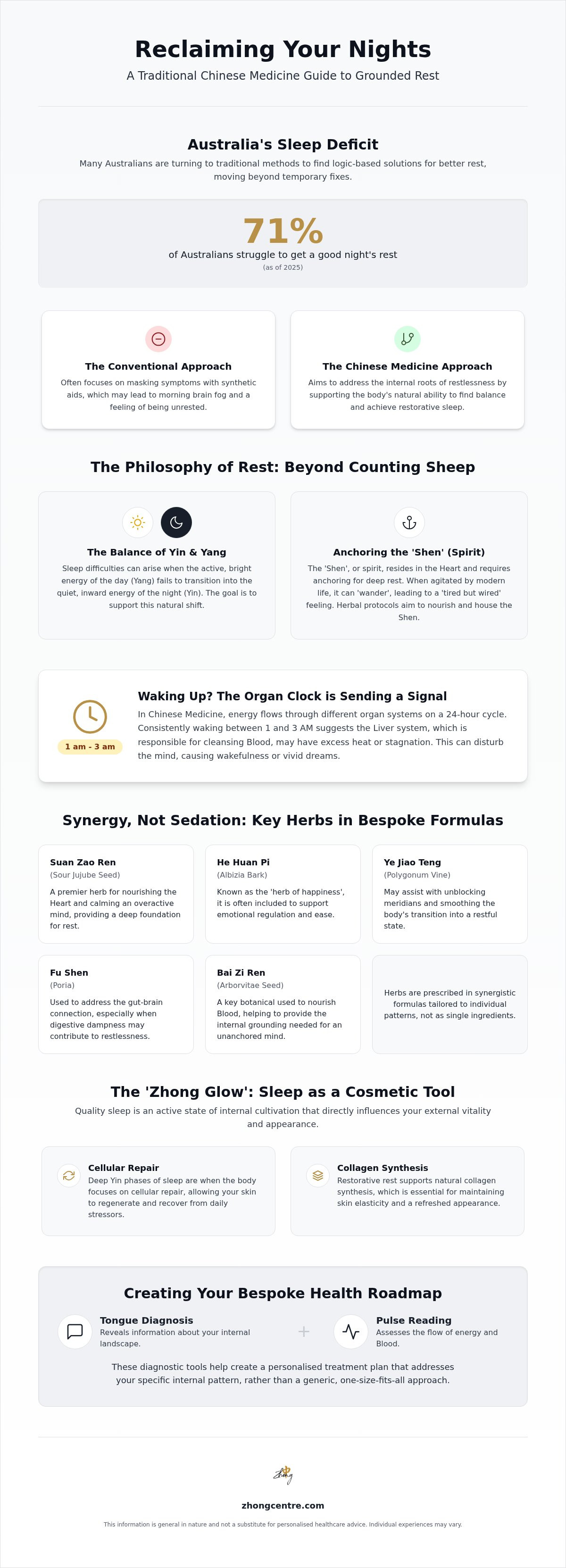
What if your 3 am ceiling-staring sessions aren't just a nuisance, but a loud, internal SOS from a system out of sync? With roughly 71% of Australians struggling to get a good night's rest as of 2025, many are turning to Chinese herbs for sleep to find a more grounded, logic-based solution. You've likely tried the standard chemist-shelf pills, only to wake up with a heavy brain fog that’s just as draining as the insomnia itself. Masking symptoms with synthetic aids isn't a strategy. It's a compromise that leaves your skin dull and your spirit depleted.
This guide is designed to show you how Traditional Chinese Medicine addresses the internal roots of restlessness. By focusing on the 'Shen', or spirit, these natural protocols aim to support a deeper, more restorative rest that naturally enhances your morning glow. We will explore how specific herbal formulations may help calm the nervous system and nourish your body from the inside out. Discover a rebel-approved approach to reclaiming your nights and your vitality without the pharmaceutical hangover. This information is general in nature and not a substitute for personalised healthcare advice. Individual experiences may vary.
Key Takeaways
- Understand why rest is an active internal cultivation and how 'anchoring' the spirit is the key to addressing a racing mind.
- Learn why tailored chinese herbs for sleep are designed to support your specific system rather than acting as a generic, heavy-handed sedative.
- Discover the 'Zhong Glow' and how quality sleep assists with natural collagen synthesis and cellular repair for a refreshed appearance.
- Explore TCM-inspired evening rituals that help Melbourne's high-performers transition from the 'Yang' energy of the city to a restful 'Yin' state.
- Uncover the logic behind Traditional Chinese Medicine diagnostics, including how tongue and pulse readings help create your bespoke health roadmap.
The Chinese Medicine Philosophy of Rest: Beyond 'Counting Sheep'
Sleep isn't just a passive void. In Chinese Medicine, it's an active state of internal cultivation. While Western models often focus on the brain's neurochemistry, Traditional Chinese Medicine looks at the dance between Yin and Yang. Your day is Yang: bright, active, and outward. Your night must be Yin: dark, quiet, and inward. When these two are out of balance, your body struggles to power down. If you're lying awake at midnight, it's often because your Yang energy is still flared up, refusing to descend into the cool embrace of Yin. Using chinese herbs for sleep is designed to assist this transition rather than simply sedating the nervous system.
There's a distinct difference between the person who can't fall asleep and the one who wakes at 3 am. Through a Traditional Chinese Medicine lens, difficulty falling asleep often relates to an unsettled spirit or a lack of Blood to anchor the mind. In contrast, waking in the early hours frequently points to internal heat or stagnation within specific organ systems. We don't just ask if you're tired. We ask when the restlessness hits and what it feels like. Understanding these patterns is the first step toward a bespoke treatment plan that addresses your specific internal landscape.
Understanding the Shen and Your Nervous System
Your Shen is the cognitive and emotional spark that requires anchoring for rest. In the Traditional Chinese Medicine tradition, the Shen resides in the Heart. At night, it needs to be 'housed' and protected to allow for deep recovery. Modern Melbourne life is a relentless assault on this stability. High-pressure careers, constant digital pings, and the 'St Kilda pace' keep your spirit in a state of hyper-vigilance. When the Shen is agitated, it wanders. This leads to that familiar feeling of being 'tired but wired'. Targeted herbal protocols aim to nourish the Heart and provide the heavy, anchoring energy your spirit needs to stay put.
The Circadian Rhythm of the Organs
The Traditional Chinese Medicine Organ Clock is a 24-hour roadmap of energy flow. Every two hours, a different system takes the lead. If you find yourself waking like clockwork at 3 am, your Liver system is likely waving a red flag. This is the time when the Liver should be storing and cleansing Blood. If there is excess heat or emotional stagnation, the system flares up. This heat disturbs the mind, often resulting in vivid, exhausting dreams or a sudden spike in cortisol. Cooling the system and clearing this stagnation is essential. It allows the body to enter the deep, restorative Yin phases required for cellular repair. This information is general in nature and not a substitute for personalised healthcare advice. Individual experiences may vary.
Essential Chinese Herbs for Sleep Support and Calm
Forget the pharmaceutical approach of one-pill-fits-all. Professional herbalism rejects the idea of "magic" single ingredients in favour of sophisticated, synergistic formulas. In Traditional Chinese Medicine, we don't just throw a sedative at the problem. We build a squad. A tailored herbal medicine prescription is designed to address your specific internal pattern, ensuring the herbs work together to support your system without the heavy-handedness of synthetic alternatives. This bespoke method is what separates clinical practice from health-store guesswork.
Several key players frequently anchor these formulas. Suan Zao Ren (Sour Jujube Seed) is the premier herb for nourishing the Heart and calming an overactive mind. It aims to provide the deep, quiet foundation needed for rest. For those navigating the emotional weight of Melbourne life, He Huan Pi (Albizia Bark), known as the 'herb of happiness', is often included to support emotional regulation. We also utilise Ye Jiao Teng (Polygonum Vine) to assist with unblocking meridians and smoothing the transition into sleep. If digestive 'dampness' is the culprit behind your restless nights, Fu Shen (Poria) is used to address the gut-brain connection and support a settled middle.
Nourishing the Blood to Anchor the Mind
Light, easily disturbed sleep is often a sign of what we call Heart Blood deficiency. Your spirit needs a "home" to return to at night. If the body lacks internal 'moisture' and nourishment, the Shen remains unanchored and flighty. Bai Zi Ren is a key botanical used here to support this internal grounding. By focusing on nourishing the Blood, these chinese herbs for sleep aim to provide a settled, heavy-lidded feeling as bedtime approaches. You don't wake up with the grogginess associated with over-the-counter aids because the goal is systemic health, not temporary suppression.
Addressing the 'Rebel' Liver Fire
If your mind feels like a browser with fifty tabs open, you're likely dealing with 'Rebel' Liver Fire. This rising energy is common in high-stress environments and leads to that "wired but tired" state. To counter this, we use "heavy" substances like Long Gu (Dragon Bone). This isn't actually bone, but fossilised mineral material designed to settle a restless, irritable spirit. The mechanism is simple: use mineral weight to ground the rising heat. Clearing this internal fire is essential for those who find themselves frustrated and alert the moment their head hits the pillow. Booking a consultation allows us to identify if this heat is what's keeping you awake.
This information is general in nature and not a substitute for personalised healthcare advice. Individual experiences may vary.
Why Quality Sleep is Your Most Potent Cosmetic Tool
Sleep is the ultimate bio-hack for your skin. While you're drifting off, your body is busy with cellular repair and collagen synthesis. In the Traditional Chinese Medicine world, we call the resulting radiance the 'Zhong Glow'. It’s the visible evidence of a system that isn't running on fumes. When you use chinese herbs for sleep, you aren't just chasing rest; you're supporting the internal mechanisms that keep your skin resilient. Chronic restlessness creates 'internal heat', a state that often manifests as facial redness, inflammation, or stubborn breakouts. Addressing this heat from within is far more effective than just layering on topical cover-ups.
We often see the best results when patients pair their internal herbal support with The Night Oil. This creates a two-pronged approach. The herbs address the systemic roots of your insomnia, while the oil supports the skin’s lipid barrier externally. It’s a logic-based strategy that prioritises long-term health over temporary cosmetic fixes. By treating sleep as a foundational part of your aesthetic routine, you allow your body to perform its natural renewal processes without interference.
Internal Calm, External Radiance
Anchoring your Shen does more than just quiet your mind. It physically assists with reducing the appearance of stress-induced fine lines. When your spirit is unsettled, your facial muscles often hold onto that tension, even in sleep. The Liver system also plays a critical role in Blood circulation. If your Liver energy is stagnant due to poor rest, it often shows up as those persistent dark under-eye circles that no amount of concealer can truly hide. Supporting your skin from the inside out with Chinese Medicine ensures that your external appearance reflects a balanced internal state.
Complementing Your Clinical Treatments
If you are already investing in Cosmetic Acupuncture, quality sleep is your greatest ally. Better rest enhances the body's ability to respond to the micro-stimulations of the needles, potentially improving your overall results. We often suggest incorporating The Glow Masque into a dedicated evening ritual. Topical products work best when the body is in a parasympathetic 'rest and digest' state. By signalling to your nervous system that it’s time to power down, you allow your skincare to perform at its peak. This information is general in nature and not a substitute for personalised healthcare advice. Individual experiences may vary.
Modern Melbourne Life vs. Your Circadian Rhythm
Many Melburnians fall into the trap of 'revenge bedtime procrastination'. It’s that late-night scroll where you reclaim the time you lost during a busy day. From a Chinese Medicine perspective, this is a refusal to let the day's Yang energy descend. You are essentially keeping your spirit alert when it should be anchoring. Similarly, that 3 pm coffee might feel like a necessity, but it can sabotage your Shen anchoring eight hours later. Caffeine introduces artificial heat and movement into the system, making it much harder for your spirit to find its 'home' in the Heart at 11 pm. Using chinese herbs for sleep can help address this lingering stimulation by cooling the system and calming the mind.
Digital Hygiene and the Spirit
In Chinese Medicine, there is a direct 'Eye-Heart' connection. The light entering your eyes has a profound impact on your Shen. Blue light acts as a form of 'false Yang', tricking your brain into thinking the sun is still high. You need to 'organise' your environment to signal the end of the day. We often suggest a 10-minute Jade Gua Sha routine. This practice isn't just about skin health; it’s a physical ritual that helps ground your energy and moves it away from an overstimulated head. It’s a simple, logic-based way to signal the transition to Yin.
Temperature and Diet for Rest
What you eat for dinner dictates the quality of your dreams. Heavy, spicy, or greasy meals late at night create what we call 'stomach heat'. This heat rises and disturbs the mind, leading to restless tossing and turning. Instead, focus on lighter options and consider a warm foot bath before bed. Drawing energy down from the head to the feet is a classic TCM technique for calming the spirit. You can also use gentle herbal teas as an introduction to how botanical medicine can assist your nervous system. If you're ready to move beyond tea and explore a professional protocol, book a consultation with our team to discuss a bespoke herbal strategy. This information is general in nature and not a substitute for personalised healthcare advice. Individual experiences may vary.
Your Path to Better Rest: The Zhong Centre Consultation
Transitioning from chronic restlessness to restorative rest requires more than a generic supplement. At our St Kilda clinic, we take a diagnostic approach that prioritises your unique internal landscape. We don't just listen to your symptoms; we look for the systemic patterns driving them. By using chinese herbs for sleep as part of a structured protocol, we aim to address the root causes of your wakefulness. This process begins with an in-depth assessment of your history, lifestyle, and specific sleep architecture.
The diagnostic process is where the logic of Traditional Chinese Medicine truly shines. We examine your tongue and feel your pulse to gain a real-time snapshot of your internal health. Your tongue provides clues about your digestion and internal temperature, while your pulse reveals the quality of your Blood and Qi. This data allows us to create a bespoke herbal formula tailored to your specific sleep patterns. Whether you struggle with falling asleep or waking at 3 am, the goal is to provide targeted support. It is essential to see an AHPRA-registered practitioner for this work. Registration ensures your practitioner meets strict national standards for safety, education, and professional indemnity. We often find that integrating herbal medicine with Acupuncture for mental health provides a comprehensive foundation for systemic recovery.
A Personalised Approach to Herbal Medicine
'Off-the-shelf' sleep aids often fail because they treat every body like the same machine. Your system is dynamic, and your treatment should be too. As your sleep quality and energy levels improve, we adjust your herbal medicine prescription to reflect those changes. A Traditional Chinese Medicine prescription aims to support the body's natural rhythms rather than sedate it. We are looking to recalibrate your internal clock, not just turn out the lights. This iterative process ensures you are always receiving the specific support your system requires at that moment.
Ready to Reclaim Your Night?
Stepping into a more rested version of yourself starts with a single session. To make the most of your initial consultation, we suggest tracking your sleep patterns and energy levels for a week prior to your visit. Note when you feel tired, when you wake up, and how your digestion feels throughout the day. This information helps us fine-tune your roadmap to better rest. Book your TCM consultation online today to begin your journey toward a more vibrant, well-rested life.
This information is general in nature and not a substitute for personalised healthcare advice. Individual experiences may vary.
Reclaiming Your Night with Systemic Logic
Rest is your system's most vital recalibration tool. We've explored how Traditional Chinese Medicine looks beyond the surface to address the root of your restlessness, whether it's an unanchored 'Shen' or an overactive Liver system. By choosing professional chinese herbs for sleep, you're moving away from synthetic suppression and toward a logic-based restoration of your body's natural rhythms. This internal work doesn't just quiet your mind; it provides the foundation for the 'Zhong Glow', assisting with cellular repair that reflects in your skin.
At our St Kilda clinic, our AHPRA-registered practitioners provide the clinical expertise needed to design a protocol that integrates your spirit and skin health. We reject the one-size-fits-all approach in favour of bespoke care that evolves with you. It's time to stop compromising on your vitality and start supporting your system from the inside out. You deserve a morning that feels as vibrant as your evening is peaceful.
Book your bespoke TCM sleep consultation at Zhong Centre to begin your transition to deeper, more meaningful rest.
This information is general in nature and not a substitute for personalised healthcare advice. Individual experiences may vary.
Frequently Asked Questions
Can Chinese herbs for sleep interact with my current medications?
Yes, botanical compounds can interact with pharmaceutical drugs. It is vital to disclose all current medications during your consultation to ensure your herbal medicine prescription is safe and appropriate. AHPRA-registered practitioners are trained to identify potential contraindications, helping to manage your health safely while avoiding adverse reactions. This professional oversight is a logic-based safety net that over-the-counter supplements simply cannot provide.
How long does it take for Chinese herbal medicine to support better sleep?
Timelines vary depending on whether your restlessness is acute or chronic. While some patients report a shift in their sleep quality within a few nights, addressing the deeper systemic roots often takes several weeks of consistent use. We aim for long-term recalibration of your internal clock rather than a quick, temporary suppression of symptoms. Patience is part of the rebel approach to sustainable health.
Will Chinese herbs make me feel groggy the next morning?
No, chinese herbs for sleep are designed to support your body's natural transition into rest without the heavy sedation of synthetic aids. Because they focus on anchoring the spirit and cooling internal heat, most people wake up feeling refreshed rather than experiencing the 'brain fog' often associated with chemist-shelf pills. You are supporting a natural physiological process rather than forcing a chemical shutdown.
Is it safe to take Chinese herbs for sleep every night?
When prescribed by a qualified practitioner, these formulas are designed for nightly support during your treatment phase. Unlike some Western aids that carry a risk of dependency, TCM protocols aim to strengthen your system so that your body can eventually maintain its own healthy sleep architecture. We monitor your progress to ensure the herbs are assisting your system exactly as needed before eventually tapering off.
Do I need a prescription to get Chinese herbs for sleep in Australia?
You don't need a GP's script, but a professional herbal medicine prescription from a registered practitioner is required for bespoke formulas. While some "Listed" (AUST L) chinese herbs for sleep are available at health stores, they lack the high-potency synergy of a formula tailored to your unique tongue and pulse diagnostics. A professional prescription ensures the herbs address your specific internal landscape safely.
What is the difference between Western sleep aids and Chinese herbal formulas?
Western aids typically act as sedatives to knock out the nervous system, often ignoring the reason you can't sleep. In contrast, Chinese herbal formulas address the internal imbalances, like Blood deficiency or Liver heat, that cause the restlessness. One masks the symptom with a heavy-handed approach, while the other aims to support the body’s own ability to fall and stay asleep naturally.
Can Chinese herbs help with sleep apnoea or just restlessness?
Chinese Medicine focuses on addressing the restlessness and spirit agitation that often accompany sleep disorders. While herbs can support your overall respiratory and systemic health, obstructive sleep apnoea is a complex medical condition affecting roughly 20% of Australians. It requires a formal diagnosis and management plan from a sleep specialist, though TCM can be a valuable partner in supporting your general wellbeing.
How do I know if my sleep problem is caused by 'Liver Fire' or 'Heart Deficiency'?
Identifying these patterns requires the clinical diagnostic tools of TCM, such as tongue and pulse readings. Generally, 'Liver Fire' often presents as irritability and waking with a racing mind between 1 am and 3 am. 'Heart Deficiency' might manifest as light, easily disturbed sleep and mild palpitations. A thorough consultation is the only way to accurately map your internal landscape and determine which pattern needs addressing.
This information is general in nature and not a substitute for personalised healthcare advice. Individual experiences may vary.