

Chinese Cold Remedies: A Rebel’s Guide to TCM in Melbourne
Melbourne weather is a chaotic mess, and your immune system is usually the one paying the price. If you're tired of the same old synthetic "quick fixes" that only mask the problem, it's time to look at the logic of the "Wind" invasion. Finding a genuine Chinese remedy for cold symptoms requires more than a random bottle of pills from a chemist shelf. It demands a strategy that respects your body's systemic health.
We agree that the cycle of recurring seasonal sniffles is frustrating, especially when you're unsure which herbs actually match your specific symptoms. You deserve a clear path that avoids the pharmaceutical loop and looks at the root cause of your vulnerability. This guide explores how Traditional Chinese Medicine logic and modalities like acupuncture aim to support your natural defences during the erratic Melbourne flu season. We'll preview the specific herbal patterns designed to assist with your wellbeing and explain how these time-tested methods work to support your internal harmony.
This information is general in nature and not a substitute for personalised healthcare advice. Individual experiences may vary.
Key Takeaways
- Learn why a generic chinese remedy for cold is less effective than a pattern-based approach that targets your specific symptoms.
- Discover how to use kitchen alchemy and warming or cooling foods to support your body's natural response to seasonal shifts.
- Understand how acupuncture and specific pressure points aim to assist with respiratory health and help manage congestion.
- Strengthen your "Wei Qi"-your energetic suit of armour-with simple preventative habits tailored for Melbourne's erratic weather.
- Recognise the value of a personalised Chinese Medicine consultation to address the root cause of recurring seasonal sniffles.
Wind-Cold or Wind-Heat? Decoding the Chinese Medicine Logic
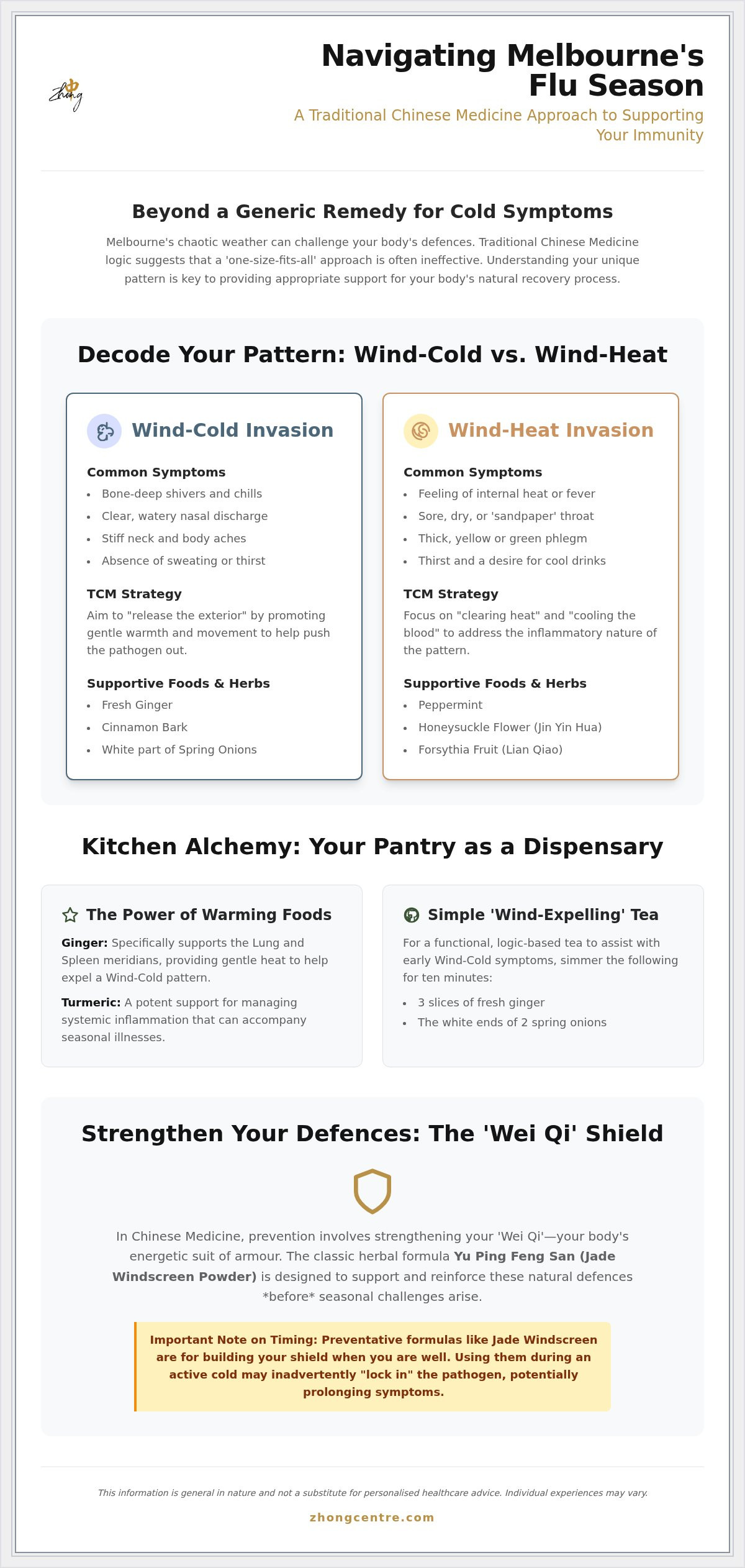
Melbourne weather is a masterclass in inconsistency. One hour you're in a t-shirt; the next, a southerly buster is rattling the windows. In Traditional Chinese Medicine (TCM), we view these environmental shifts as "Wind." It's considered the spearhead of disease, carrying external pathogens through your pores and into your system. When your defences are down, Wind doesn't just knock; it invades.
Most people reach for a generic chinese remedy for cold symptoms without a second thought. That's a fundamental mistake. A "one size fits all" approach fails because it ignores your unique internal landscape. If you don't identify your specific pattern first, you might actually be working against your body's natural recovery process. In our St Kilda clinic, we prioritise diagnostic logic over pharmaceutical bandaids.
Wind-Cold Symptoms: The Shivers and the Sniffles
When Melbourne’s temperature dives suddenly, "Wind-Cold" often strikes. You'll know it by the bone-deep shivers that a heater can't quite touch. Your nose starts running with clear, watery discharge, and your neck feels like it’s been locked in a vice. The logic here is to "release the exterior." We aim to support the body in pushing that cold pathogen back out through the skin. It’s a strategy of movement and gentle warmth, designed to assist with those initial body aches before they settle deeper into your system.
Wind-Heat Symptoms: Searing Throats and Fever
Sometimes a cold doesn't feel cold at all. This is "Wind-Heat." Instead of shivers, you feel a mounting internal fire. Your throat feels like it’s been scrubbed with sandpaper. Any phlegm is thick and yellow, and you're constantly reaching for water. The strategy shifts entirely for this pattern. We focus on cooling the blood and clearing the heat. This is why a popular chinese remedy for cold like ginger tea can be a disaster for this specific pattern; it adds heat to an already inflamed system. You need to cool the fire, not fan it.
This information is general in nature and not a substitute for personalised healthcare advice. Individual experiences may vary.
Kitchen Alchemy: Herbal Support and Nutrition for Colds
Your pantry is more than a storage space; it’s a functional dispensary. In Chinese Medicine, we don't just see calories or vitamins. We see thermal nature. When you're looking for a chinese remedy for cold relief, the temperature and flavour of your food can either assist your recovery or hinder it. Cold, raw salads during a Melbourne winter are a metabolic nightmare for your Spleen. Instead, we prioritise "warming" foods that support your internal fire and help circulate your energy.
Hydration isn't just about smashing two litres of chilled water. From a TCM perspective, fluids should be warm or room temperature to avoid shocking the system. If you're dealing with a Wind-Heat pattern, finding the right chinese remedy for cold symptoms involves classic formulas like Yin Qiao San. This formula utilises cooling herbs like honeysuckle and forsythia to support the body's natural cooling mechanisms. Conversely, if you're battling the shivers, culinary staples like cinnamon and the white part of spring onions aim to assist in "sweating out" the pathogen by gently opening the pores.
The Power of Ginger and Turmeric
Ginger is the workhorse of the TCM kitchen. It specifically supports the Lung and Spleen meridians, providing the gentle heat needed to expel a Wind-Cold invasion. Turmeric serves as a potent support for reducing systemic inflammation that often accompanies seasonal sniffles. For a simple "Wind-Expelling" tea, simmer three slices of fresh ginger with the white ends of two spring onions for ten minutes. It’s a functional, logic-based alternative to synthetic syrups that focuses on systemic support rather than just masking a cough.
Jade Windscreen: The Herbal Shield
Prevention is the ultimate rebel act. Yu Ping Feng San, or Jade Windscreen Powder, is a legendary formula designed to support your "Wei Qi", your body's energetic suit of armour. It aims to strengthen your defences before the Wind hits. However, timing is everything. This formula is for building your shield, not for when the battle is already raging. If you use it during an active infection, you risk "locking the door" on the pathogen, potentially prolonging your symptoms. For a strategy tailored to your current state, you might consider a TCM consultation to get a bespoke herbal prescription.
This information is general in nature and not a substitute for personalised healthcare advice. Individual experiences may vary.
Beyond the Bowl: Acupuncture and Physical Modalities
While kitchen herbs are your first line of defence, sometimes the body requires a more direct, physical intervention. When you are looking for a chinese remedy for cold relief that goes beyond the digestive system, acupuncture and manual therapies offer a systemic reset. In Chinese Medicine, we don't just wait for the body to catch up. We use targeted modalities to move stagnant energy and assist the body's natural defensive response. It's about shifting the environment within, making it a less hospitable place for pathogens to linger.
Acupuncture for Immune Support
At our St Kilda clinic, we don't just place needles randomly. We target specific portals like 'Large Intestine 4' and 'Lung 7'. These points are strategically chosen to support respiratory function and assist with clearing nasal congestion. The experience is designed to be deeply restorative. Research indicates that acupuncture aims to assist in the regulation of cytokines, the signalling proteins that coordinate your immune response. By fine-tuning these internal signals, we support your body's ability to navigate seasonal challenges without the heavy-handed approach of synthetic suppressants.
Cupping and Gua Sha: The Physical Release
When a cold feels like it has settled into your chest or shoulders, cupping therapy provides a unique form of relief. It uses suction to "pull" stagnant Qi and pathogens toward the surface, assisting with that heavy, restricted feeling in the lungs. Similarly, Gua Sha is our favourite rebel tool for an early-stage scratchy throat. By gently scraping the neck and shoulder area, we aim to release "trapped" Wind before it penetrates deeper into your system.
These physical modalities are a core part of our approach to Chinese Medicine Melbourne. We view these techniques not just as symptom management, but as a way to maintain your systemic health and aesthetic vitality. A body that can efficiently clear a "Wind" invasion is a body that maintains its glow and resilience. Unlike pharmaceutical "quick fixes" that often drive pathogens deeper, these methods assist the body in a clean, thorough expulsion. This is how we address the root cause while supporting your immediate comfort.
This information is general in nature and not a substitute for personalised healthcare advice. Individual experiences may vary.
Building Your Internal Shield: Prevention the TCM Way
In the world of holistic wellness, the best chinese remedy for cold symptoms is the one you never have to use. We focus on building your "Wei Qi," a concept that represents your body's energetic suit of armour. Wei Qi is the body's first line of defence against external pathogens. When this shield is robust, you can navigate a Melbourne southerly without your system collapsing. However, a shield is only as strong as the lifestyle that supports it. If you're constantly red-lining your stress levels, your armour starts to rust.
Modern trends often sabotage this protective layer. We see people pushing through excessive cold showers or over-cleansing their skin in the middle of July. While these might have their place in summer, doing them in winter can weaken your exterior. It forces your body to expend precious energy just to maintain its core temperature. This leaves your "gates" open for a Wind invasion. True rebellion is choosing conservation over trendy, high-stress bio-hacks that leave you vulnerable during the peak of the flu season.
The Importance of the 'Wind Gate'
Your upper back and the base of your neck are your most vulnerable points. In Traditional Chinese Medicine, we call the 'Feng Men' area the 'Wind Gate.' It is the primary entry point for environmental pathogens. This is why a scarf is more than a fashion choice in Melbourne; it’s a functional shield. By keeping this area warm, you assist your body in maintaining its defensive perimeter. If you feel a draft on the back of your neck and a sudden shiver, your shield has likely been breached. Protecting this area aims to reduce the likelihood of Wind-Cold settling into your lungs.
Seasonal Living and Rest
Winter is a time for storage, not expenditure. Aligning your sleep schedule with shorter days isn't lazy; it's logical. When you stay up late under artificial lights, you drain the very reserves your immune system relies on. We also recommend avoiding "Damp-producing" foods during the colder months. Excessive dairy and iced drinks create internal "sludge" that makes it harder for your Wei Qi to circulate freely. Instead, focus on slow-cooked, grounding meals that support your internal fire and assist with your overall vitality.
Building a resilient system requires a bespoke approach that accounts for your unique constitutional weaknesses. If you're tired of being the person who catches every bug that goes around the office, it's time to book a consultation to strengthen your internal defences and find a personalised chinese remedy for cold prevention.
This information is general in nature and not a substitute for personalised healthcare advice. Individual experiences may vary.
Personalised Chinese Medicine in St Kilda: Your Next Steps
Relying on a pre-packaged chinese remedy for cold symptoms is like wearing someone else’s prescription glasses. It might provide a blurry version of relief, but it’s rarely a perfect fit for your specific needs. In a world of mass-produced health solutions, the real rebellion is choosing a path that respects your individual biology. We don't believe in generic protocols because your body doesn't experience "Wind" the same way your neighbour does. A bespoke plan is designed to address your unique constitutional weaknesses rather than just quietening a cough.
Integrating ancient logic with a modern Melbourne lifestyle requires more than just a few herbs. It demands a sophisticated understanding of how your environment, stress levels, and diet intersect. Our St Kilda clinic serves as a hub for those who are dissatisfied with the pharmaceutical status quo. We provide a space where clinical expertise meets disruptively honest wellness, aiming to support your systemic health through every seasonal shift.
What Happens During a Zhong Centre Consultation?
We begin with pulse and tongue diagnosis, which we often describe as the Traditional Chinese Medicine version of a blood test. Your tongue’s coating and your pulse’s depth provide a real-time map of your internal landscape. This diagnostic logic allows us to identify whether you are dealing with a lingering Dampness or a depleted Wei Qi. From there, we provide custom herbal prescriptions tailored to your specific presentation. This holistic approach looks beyond the current sniffle, aiming to assist with your long-term resilience and vitality.
Ready to Support Your System?
Taking control of your seasonal health is a proactive choice. Our "Rebel Expert" practitioners are highly qualified professionals who operate differently. We prioritise long-term systemic integrity over temporary cosmetic or physical fixes. Whether you are looking for a specific chinese remedy for cold support or a complete overhaul of your internal defences, we are here to guide the process. We invite you to step away from synthetic "quick fixes" and move toward a logic-based alternative that treats you as a whole person.
If you're ready to stop the cycle of recurring seasonal issues, it’s time to take action. You can Book your TCM consultation at Zhong Centre to begin your journey toward a more balanced, resilient system.
This information is general in nature and not a substitute for personalised healthcare advice. Individual experiences may vary.
Reclaim Your Seasonal Resilience
Melbourne’s erratic weather doesn't have to dictate your wellbeing. By understanding the logic of Wind invasions and building your internal shield, you move beyond masking symptoms to support your systemic health. True resilience comes from aligning your lifestyle with the seasons and knowing when your body needs a targeted reset. We've explored how identifying your specific pattern and using physical modalities like acupuncture can assist your recovery process.
A generic chinese remedy for cold symptoms often misses the mark because it ignores your unique constitutional patterns. That's why we prioritise logic-based health plans over pharmaceutical shortcuts. Led by Dr Abbie Cloherty, our specialised TCM practitioners in Melbourne provide the clinical expertise needed to help you navigate the flu season with confidence. You deserve a healthcare strategy that is as bespoke as you are.
Book your bespoke TCM consultation at Zhong Centre St Kilda and take control of your internal defences today. We're here to help you feel empowered, grounded, and ready for whatever the Melbourne sky throws your way.
This information is general in nature and not a substitute for personalised healthcare advice. Individual experiences may vary.
Frequently Asked Questions
Can Chinese Medicine support my body during a cold?
Chinese Medicine aims to support your body’s natural defences and assist with symptom management during the flu season. By identifying specific patterns like Wind-Cold or Wind-Heat, practitioners provide a tailored chinese remedy for cold relief that focuses on systemic balance. This approach looks beyond the immediate sniffle to address the root cause of your vulnerability and assist with long term resilience.
Is ginger a good Chinese remedy for all types of colds?
Ginger is specifically designed to assist with Wind-Cold patterns characterised by shivers and clear discharge. Because ginger is thermally warming, it may actually aggravate Wind-Heat symptoms like a sore throat or fever. It’s essential to identify your specific pattern before using ginger as a chinese remedy for cold symptoms to avoid accidentally fanning an internal fire.
How does Acupuncture assist with sinus congestion?
Acupuncture aims to assist with sinus congestion by targeting specific points that support respiratory flow and reduce inflammation. Fine needles are placed to help "open the portals," which may help with easier breathing and pressure relief. This physical modality provides a direct intervention to move stagnant Qi in the facial and chest areas, supporting your body's ability to clear blockages naturally.
What is the 'Wind Gate' in Traditional Chinese Medicine?
The 'Wind Gate,' or Feng Men, is a specific area on the upper back and neck considered highly vulnerable to environmental pathogens. In Chinese Medicine, protecting this area with scarves or warmth aims to prevent Wind from invading the system. Keeping the Wind Gate shielded is a practical, logic-based way to assist your body's defensive Wei Qi during Melbourne's sudden temperature drops.
Are Chinese herbs safe to take with other medications?
Chinese herbs can often be used alongside other medications, but a professional consultation is vital to ensure safety and avoid potential interactions. Our practitioners are trained to review your current health plan and provide herbal medicine prescriptions that complement your existing care. Always inform your practitioner of any pharmaceutical drugs or supplements you are currently taking to ensure an integrated approach.
How many sessions of Acupuncture are needed for cold support?
The number of sessions varies depending on the severity of your symptoms and your overall constitutional strength. Some people find that one or two sessions provide the necessary support to assist with acute congestion or body aches. For those with recurring seasonal issues, a longer-term plan may be designed to help strengthen the body’s protective energy and assist with systemic health.
What should I eat when I feel a cold coming on according to TCM?
Focus on warm, easily digestible foods like congee or light broths to support your Spleen and Lung energy. Avoid "Damp-producing" foods like dairy, sugar, and chilled drinks, which can create internal sludge and hinder your recovery. Choosing thermally appropriate ingredients based on whether you feel chilly or feverish aims to assist your body’s internal harmony and provide functional nutritional support.
Does Zhong Centre offer personalised herbal formulas in Melbourne?
Yes, Zhong Centre provides bespoke herbal medicine prescriptions following a comprehensive TCM consultation at our St Kilda clinic. We don't believe in "one size fits all" solutions. Instead, we use pulse and tongue diagnosis to create a formula that targets your specific symptoms and constitutional needs, integrating ancient logic with your modern Melbourne lifestyle to support your overall wellbeing.
This information is general in nature and not a substitute for personalised healthcare advice. Individual experiences may vary.