

Acupuncture for TMJ Pain in Balaclava: Jaw Tension Relief
What if managing chronic clenching isn't about freezing your facial muscles, but teaching your nervous system how to let go? If you wake up with aching temples, stiff masseters, and jaw clicking that defies rigid mouthguards, you aren't imagining the strain. Opting for acupuncture for TMJ pain balaclava residents seek just minutes away in St Kilda provides a grounded, neuromuscular approach to uncoupling stubborn facial tension.
You already know the frustration of recurring synthetic injectables and plastic splints that only manage surface wear while your jaw remains locked in survival mode. Chronic jaw dysfunction is rarely an isolated dental complaint; it's a physical alarm from an overworked sympathetic nervous system holding onto stress.
In this guide, you'll discover how modern myofascial needling and integrative Chinese Medicine address deep trigger points to support genuine muscular release, ease discomfort, and encourage restorative sleep. We'll examine the clinical mechanisms behind jaw tension, review verified research on acupuncture protocols, and outline how comprehensive whole-person care helps restore comfort to daily movement.
Key Takeaways
- Understand how TMJ dysfunction often stems from nervous system overload and how myofascial needling of the masseter and pterygoid muscles helps release stubborn muscular tension.
- Explore how targeted acupuncture for TMJ pain balaclava locals access nearby combines Chinese Medicine diagnostics to support jaw mobility and soothe nocturnal clenching.
- Compare neuromuscular acupuncture with synthetic injectables to see how natural trigger point work supports long-term jaw function without causing muscular atrophy.
- Discover what to expect during an integrative assessment, from postural and bite evaluations to calming clinical spaces designed to down-regulate your sympathetic nervous system.
- Plan a seamless visit with convenient travel and parking routes running straight down Carlisle Street from Balaclava into neighbouring St Kilda.
Understanding TMJ Dysfunction: Why Jaw Tension Plagues Balaclava Locals
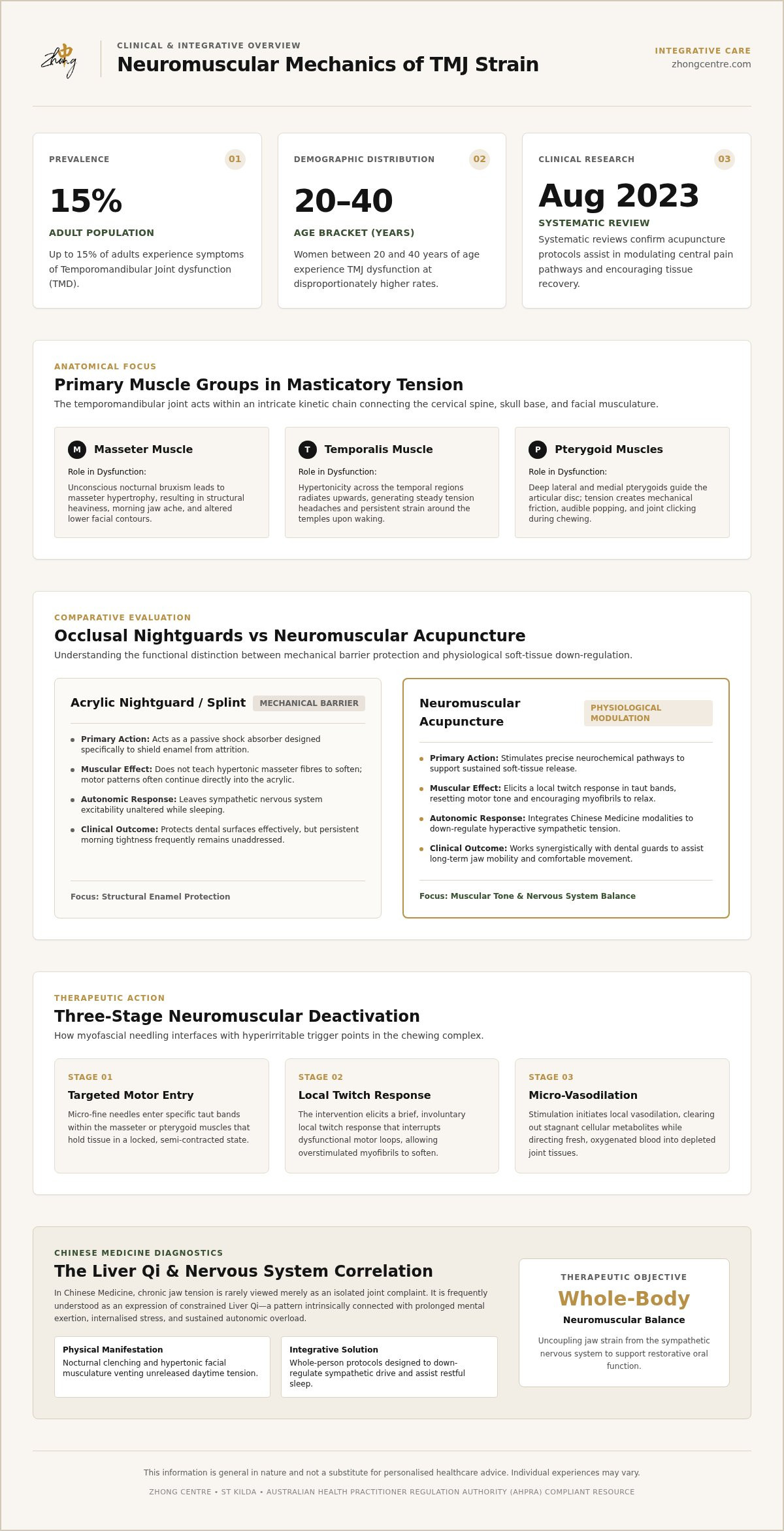
Your jaw works tirelessly. Every conversation, meal, and suppressed emotion filters directly through the temporomandibular joint, the intricate hinge connecting your jawbone to your skull. When functioning smoothly, it glides effortlessly. Yet, clinical data indicates that up to 15% of adults experience symptoms of Temporomandibular joint dysfunction (TMD), with women between 20 and 40 experiencing the condition at disproportionately higher rates.
For city dwellers balancing frantic commutes and sustained screen fatigue, unconscious teeth clenching becomes a default stress response. Forward head posture pulls the mandible out of alignment, overloading the surrounding craniomandibular tissues. Because the joint operates within an intricate kinetic chain involving the cervical spine and skull base, isolated tension quickly radiates outwards. Seeking targeted Chinese Medicine modalities like acupuncture for TMJ pain balaclava residents discover nearby helps address these deep-seated muscular triggers at their root.
Common Manifestations of TMJ Strain
Jaw strain rarely remains confined to the mouth. Instead, it creates a persistent pattern of regional discomfort that disrupts daily life:
- Nocturnal bruxism: Grinding your teeth through the night leaves masseters hypertonic, resulting in dull morning temporal tension.
- Audible clicking or popping: Misalignment of the articular disc causes friction, making yawning or chewing painful.
- Referred head and neck strain: Persistent jaw tightness radiates into the upper trapezius, sternocleidomastoid, and inner ear structures.
The Limitations of Dental Splints and Occlusal Guards
The standard modern response to clenching is an acrylic nightguard. While essential for protecting delicate enamel against nocturnal wear, a rigid guard acts merely as a shock absorber. It does not teach hypertonic chewing muscles to soften, nor does it regulate the hyperactive sympathetic nervous system firing those motor patterns while you rest.
Many patients continue to clench directly into the plastic, waking with identical morning tightness. Sustained muscular ease demands an intervention that directly encourages soft tissue release and down-regulates nervous system excitability. By incorporating neuromuscular protocols, acupuncture for TMJ pain balaclava locals turn to provides an integrative, whole-body strategy that works alongside your dentist's physical guards to support lasting jaw mobility.
How Acupuncture for TMJ Pain Operates: Neuromuscular Mechanics
Acupuncture is grounded, precise neuromuscular therapy. When micro-fine needles interface with the contracted fibres of the masseter, temporalis, and pterygoid muscles, they stimulate distinct neurochemical changes. Modern clinical trials, including an August 2023 systematic review, confirm that acupuncture protocols assist in modulating central pain pathways while encouraging tissue recovery. When exploring acupuncture for TMJ pain balaclava patients often discover that chronic nocturnal grinding has altered their lower facial profile. Unconscious bruxism frequently leads to masseter hypertrophy, creating physical heaviness alongside structural ache. Precise needling directly addresses this dual burden, helping relax bulked muscle fibres while easing mechanical joint loading.
Deactivating Myofascial Trigger Points in the Jaw
Taut bands within the chewing muscles develop hyperirritable trigger points that lock tissue into a semi-contracted state. By entering these specific motor points, hair-thin needles elicit an involuntary local twitch response. This brief twitch helps reset resting muscle tone, encouraging overstimulated myofibrils to soften. At the same time, the micro-trauma stimulates local vasodilation, flushing out stagnant inflammatory metabolites and drawing oxygenated blood straight into oxygen-depleted jaw tissues.
Systemic Nervous System Regulation in Chinese Medicine
In Chinese Medicine, persistent jaw tension is rarely viewed as an isolated joint complaint. It is often understood as an expression of constrained Liver Qi, a pattern associated with sustained mental focus, internalised stress, and emotional pressure. When daily stress finds no natural outlet, the body vents that tension across the jawline and temples while you sleep.
Integrative care addresses this dynamic by pairing local trigger-point needling with distal points along the hands, lower legs, and feet. This holistic method helps shift your autonomic nervous system away from chronic sympathetic fight-or-flight and into deep parasympathetic ease. Cultivating systemic calm helps curb the neurological impulses that trigger nocturnal clenching before they start. For individuals ready to step away from temporary interventions, scheduling an integrative assessment offers a grounded pathway toward sustainable muscular comfort.
Acupuncture vs Masseter Injections for Jaw Clenching
Freeze the muscle or retrain it? That is the fundamental choice facing chronic clenchers today. In conventional aesthetic clinics, synthetic neurotoxin injections into the masseter muscle are frequently promoted as a convenient shortcut for jaw slimming and tension. Yet immobilising dynamic chewing machinery comes with biological compromises. A 2021 randomised clinical trial evaluating acupuncture against Botulinum toxin (BoNT-A) for jaw discomfort revealed that while both interventions assisted with pain reduction after one month, the synthetic toxin caused a marked drop in muscle electrical activity (EMG). Rather than chemically disabling motor function, targeted acupuncture for TMJ pain balaclava locals explore nearby aims to restore genuine neuromuscular equilibrium.
Understanding the Risks of Muscle Atrophy from Toxins
Paralysing a major functional muscle produces distinct structural trade-offs. Repeated neurotoxin injections induce masseter atrophy. Over extended periods, this artificial immobilisation can lead to secondary weakness, compromised chewing force, and altered jaw tracking. Clinical literature also highlights that long-term disuse may contribute to reduced bone density along the mandibular angle. When injectables diffuse into adjacent facial muscles, unintended smile asymmetry and midface hollows can follow.
Acupuncture preserves natural movement. By releasing trigger points and encouraging healthy tissue elasticity, it supports functional biomechanics without risking premature soft-tissue sagging or structural weakness.
The Dual Benefit: Pain Relief Meets Facial Softening
Constant clenching builds bulk. Hyperactive masseters create a widened, angular lower jawline that often feels visibly tight and dense. As myofascial needling down-regulates hypertonic fibres, the jawline gradually softens into a more relaxed, natural contour. You gain an unclenched appearance without introducing foreign substances into your face.
At the same time, the vascular stimulation inherent to Chinese Medicine promotes local microcirculation and lymphatic drainage across the jaw and cheek planes. Tissues receive fresh oxygenated blood, helping reduce sluggish fluid retention while enhancing your complexion. Pioneered by clinic founder Dr Abbie Cloherty, this integrative approach means you do not have to choose between functional relief and aesthetic harmony. Opting for acupuncture for TMJ pain balaclava practitioners deliver allows you to address physical discomfort while supporting systemic health and vibrant vitality.
The Treatment Journey at Zhong Centre: Care Near Balaclava
Stepping off the bustle of Carlisle Street and into Zhong Centre feels like an immediate exhale. Situated minutes from Balaclava in neighbouring St Kilda, our clinic replaces cold clinical sterility with a warm, sensory-rich space designed to soothe an overstimulated system. When seeking acupuncture for TMJ pain balaclava patients find an environment intentionally curated to drop their body out of hyper-alert vigilance and into deep restorative recovery from the moment they arrive.
Comprehensive Clinical Assessment and Tongue/Pulse Diagnostics
Effective jaw relief begins with listening to how your body holds stress. During your initial consultation, registered practitioners evaluate your mandibular tracking, range of motion, palate tension, and cervical spine alignment. Jaw issues rarely happen in isolation, so we trace how neck posture and upper back strain feed into facial tightness.
Next, we incorporate traditional Chinese Medicine diagnostics, examining your tongue mapping and radial pulse qualities. These clinical markers provide direct insight into systemic internal patterns, whether your jaw tightness stems from constitutional exhaustion, fluid stagnation, or constrained stress. This integrated physical and energetic assessment shapes a bespoke plan tailored to your body's precise needs.
The In-Clinic Experience and Adjunct Modalities
Your treatment session is quiet, intentional, and comfortable. Ultra-fine sterile needles are placed into hyperactive jaw motor points alongside balancing distal points on the hands and feet. Most patients feel only a slight dull warmth or a grounding heaviness as the local twitch response deactivates tight fibres.
During the needle retention phase, your practitioner may integrate gentle adjunct therapies to assist tissue recovery:
- Targeted Facial Gua Sha: Smooth, rhythmic strokes along the neck and mandible help release superficial fascia and improve lymphatic drainage.
- Dynamic Cupping: Gentle decompression across the upper trapezius and shoulders assists in easing upstream muscle tension pulling on the jaw.
Founded by industry leader Dr Abbie Cloherty, our registered team designs care plans around your distinct presentation. Acute jaw locking or sudden clicking flare-ups often benefit from weekly sessions to settle acute inflammation, while chronic, longstanding night clenching is managed with a structured course transitioning into seasonal maintenance. When you're ready to break the cycle of jaw tightness, book your initial consultation to begin your recovery.
Getting Started: Finding TMJ Relief Close to Balaclava
Transitioning from persistent jaw clenching to functional ease should not add logistical stress to your calendar. Zhong Centre sits just west of the Balaclava shopping strip in neighbouring St Kilda, making integrative care readily accessible for inner-south locals. Accessing professional acupuncture for TMJ pain balaclava residents need involves a brief journey along Carlisle Street, effortlessly fitting into your workday or weekend routine.
Locating Our Clinic from the Balaclava Precinct
Getting to our treatment rooms is direct and straightforward, whether you travel on foot, by public transport, or by car:
- Public transport: Board the Route 16 tram running straight down Carlisle Street towards the bay, or enjoy a short stroll west after alighting at Balaclava Station on the Sandringham line.
- Driving and parking: Ample ticketed and unmetered street parking is available along Carlisle Street and neighbouring side streets, ensuring an uncomplicated arrival without CBD congestion.
When selecting acupuncture for TMJ pain balaclava locals appreciate being able to drop in without navigating dense city traffic, creating a calm buffer before stepping into our space.
Preparation, Health Fund Rebates, and Next Steps
A few simple steps will help you get the most out of your clinical session. Plan to eat a light snack an hour or two prior so your blood sugar remains steady throughout needling. We also recommend avoiding heavy caffeine directly beforehand, giving your autonomic nervous system an unobstructed chance to downshift into deep parasympathetic rest. Wear comfortable, loose-fitting clothing that allows easy access to your neck, forearms, and lower legs.
Our reception is equipped with an on-site HICAPS terminal, allowing you to process eligible private health fund extras rebates instantly on the day. For additional logistical details regarding appointment lengths, parking tips, and clinic policies, explore our comprehensive clinic FAQ. Reclaiming daily jaw comfort starts with an unhurried consultation designed around your structural and energetic wellbeing.
Reclaiming Ease: A Modern Path to Jaw Relaxation
Living with chronic jaw tension doesn't have to be your daily reality. By looking past surface-level splints and synthetic immobilisers, you can address hyperactive chewing muscles while soothing the underlying nervous system stress that fuels clenching. At Zhong Centre, our AHPRA and CMRB registered Chinese Medicine practitioners have brought over a decade of clinical excellence to the St Kilda and Balaclava corridor. We prioritise a holistic, needle-crafted approach that rejects synthetic injectables, focusing instead on restoring dynamic movement, tissue elasticity, and genuine structural ease.
Choosing acupuncture for TMJ pain balaclava locals trust means supporting your body's natural capacity to release tension from the inside out. When you're ready to wake without aching temples and tight masseters, book your bespoke TMJ session online and experience care designed around your long-term wellbeing.
This information is general in nature and not a substitute for personalised healthcare advice. Individual experiences may vary.
Frequently Asked Questions
Does acupuncture for TMJ pain hurt around the jaw?
No, acupuncture around the jaw does not feel like a sharp dental injection. Our registered practitioners use ultra-fine, hair-thin sterile needles. You might feel a brief tap on insertion, followed by a dull ache, slight warmth, or a mild twitch when a tight masseter trigger point releases. Most patients find the sensation deeply grounding and relaxing, often drifting off to sleep during the needle retention phase.
How many sessions are typically required to experience jaw relief?
Treatment frequency varies depending on whether your discomfort is acute or chronic. Acute jaw spasms often begin to settle within three to five sessions. For long-standing clenching patterns, we typically recommend a structured series of six to eight weekly sessions to retrain muscle motor tone. When booking acupuncture for TMJ pain balaclava residents consult with us to create a progressive plan that transitions into regular seasonal maintenance.
Can acupuncture help with nocturnal teeth grinding (bruxism)?
Yes, acupuncture is designed to assist with nocturnal bruxism by addressing both muscular and neurological triggers. While dental splints protect tooth surfaces from mechanical abrasion, targeted needling aims to deactivate contracted masseter and temporalis fibres. By simultaneously using distal points to down-regulate your sympathetic nervous system, Chinese Medicine helps ease the subconscious stress response that drives nocturnal clamping, supporting deeper, more restorative sleep.
Is acupuncture a safe alternative to masseter anti-wrinkle injections?
Yes, it offers a non-invasive, functional alternative to synthetic neurotoxin injections. Anti-wrinkle injections chemically freeze the masseter, which carries potential risks like smile asymmetry, muscle atrophy, and altered bite strength over time. Neuromuscular acupuncture works with your body's physiology, releasing trigger points and restoring healthy muscular elasticity. Choosing acupuncture for TMJ pain balaclava locals rely on supports structural joint function without synthetic compounds or downtime.
Will my private health insurance cover acupuncture for TMJ pain?
Yes, if your private health insurance policy includes extras cover for acupuncture. Our practitioners are fully registered with AHPRA and the Chinese Medicine Board of Australia (CMBA), meaning treatments are recognised by all major Australian health funds. Zhong Centre provides an on-site HICAPS terminal at reception, allowing you to swipe your health fund card and claim your rebate automatically on the day of your appointment.
What should I avoid doing immediately after a jaw acupuncture session?
Give your facial muscles time to integrate the release. Avoid chewy, tough, or crunchy foods like steak, crusty sourdough, or chewing gum for the rest of the day. We also recommend skipping high-intensity gym sessions, excessive caffeine, and alcohol for several hours post-treatment. Keeping your meals soft and your evening low-key supports optimal nervous system down-regulation and sustained muscular relaxation.
Can acupuncture relieve headaches and neck tension related to TMJ?
Yes, acupuncture is particularly well suited to addressing temporal headaches and upper cervical tension linked to TMJ strain. The masseter and temporalis muscles share kinetic pathways with your neck and upper trapezius. By needling local facial points alongside motor points in the neck and shoulders, practitioners help interrupt referred pain pathways. This comprehensive approach assists in releasing tension across the entire head and neck carriage.